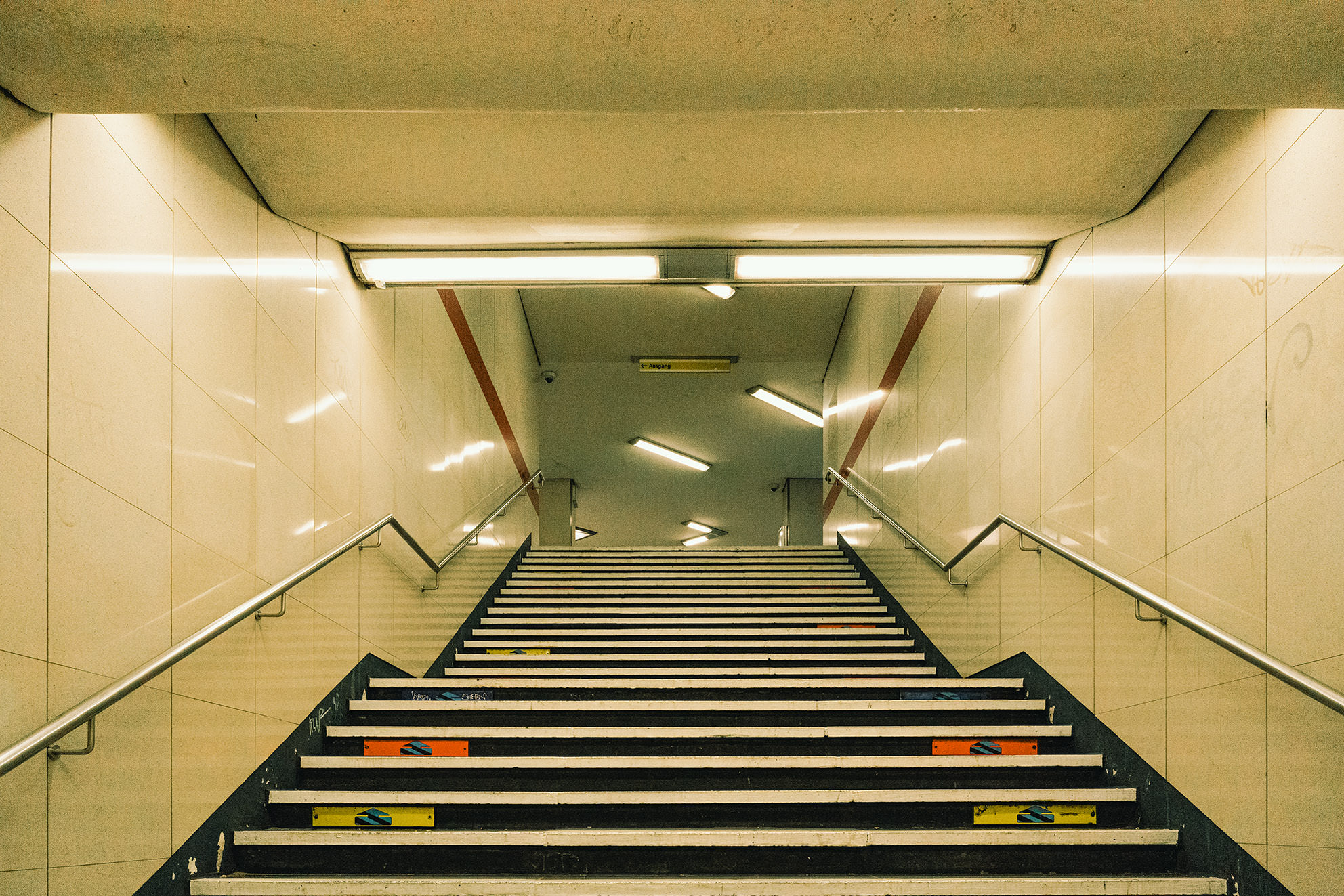
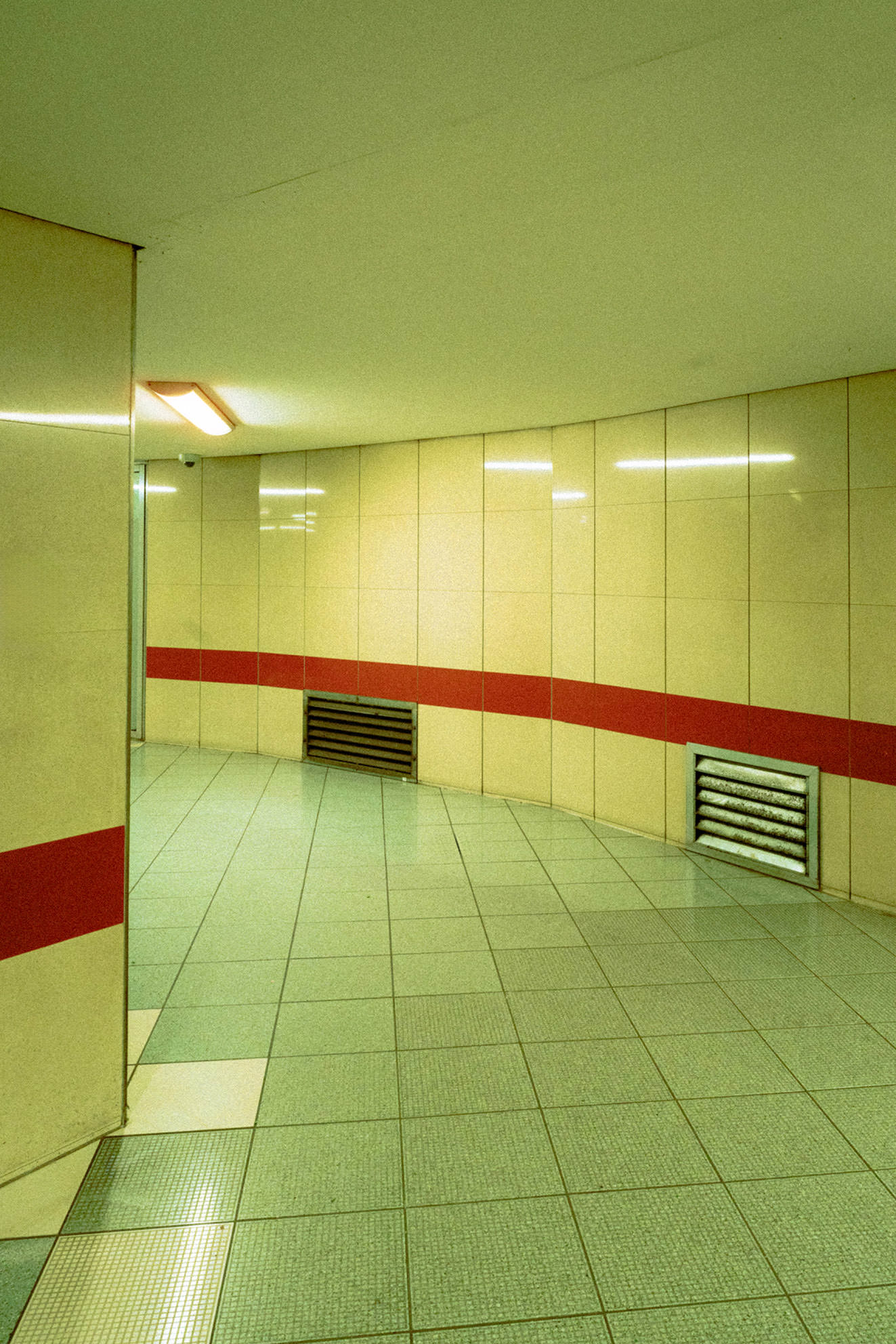
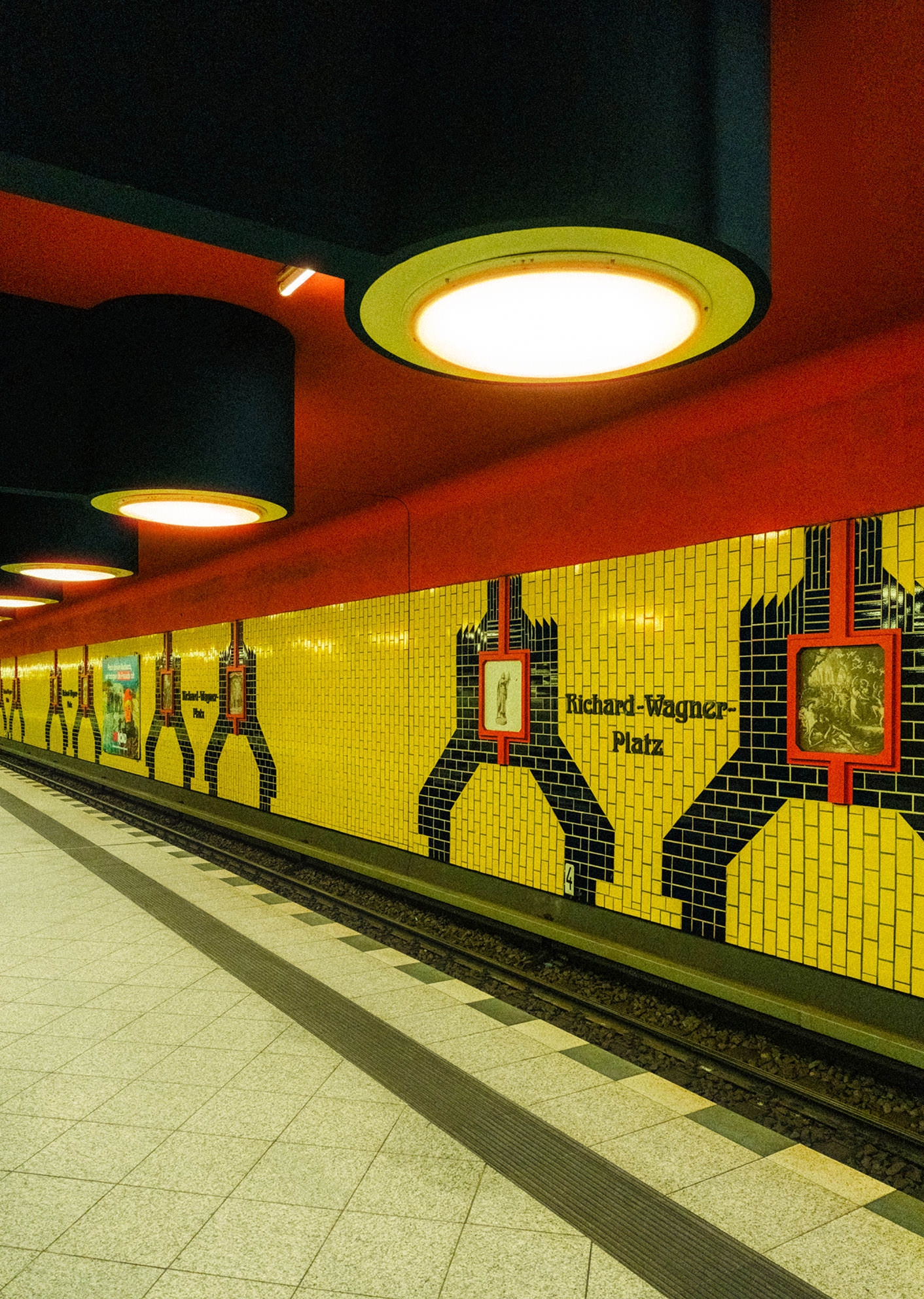
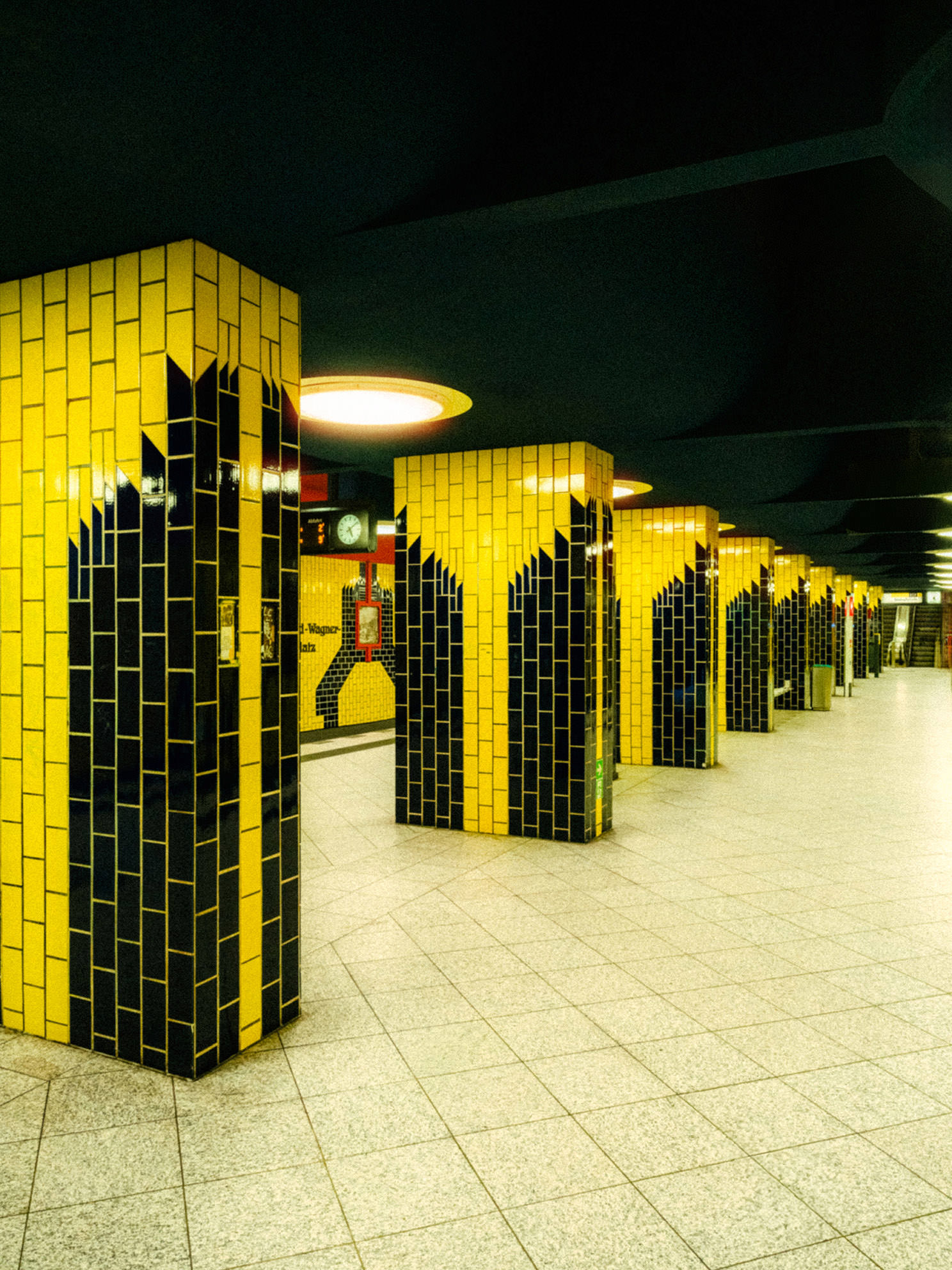
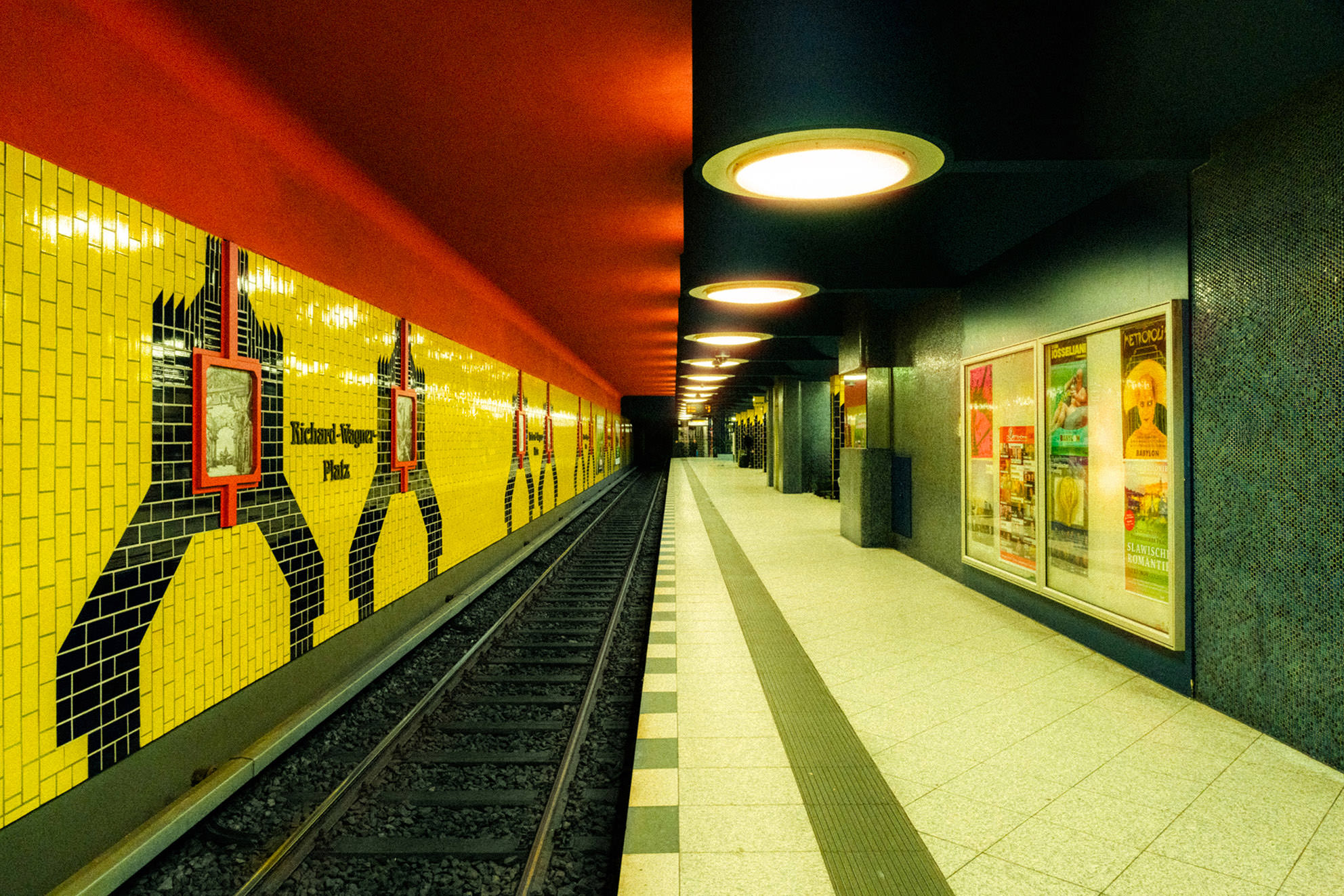
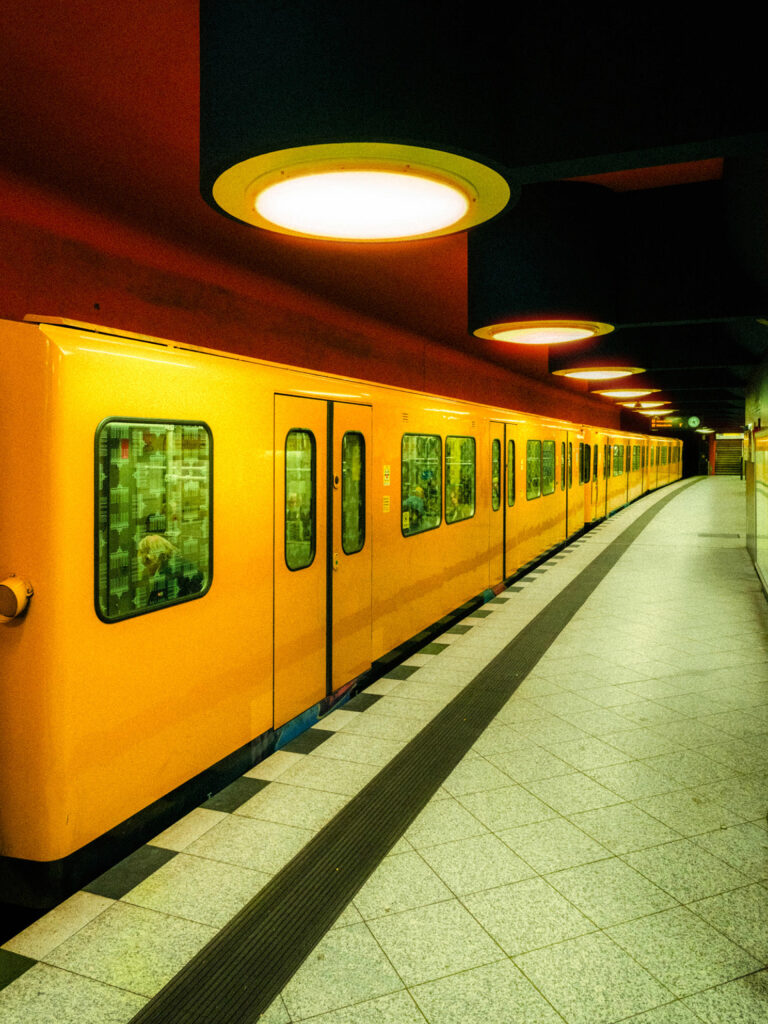
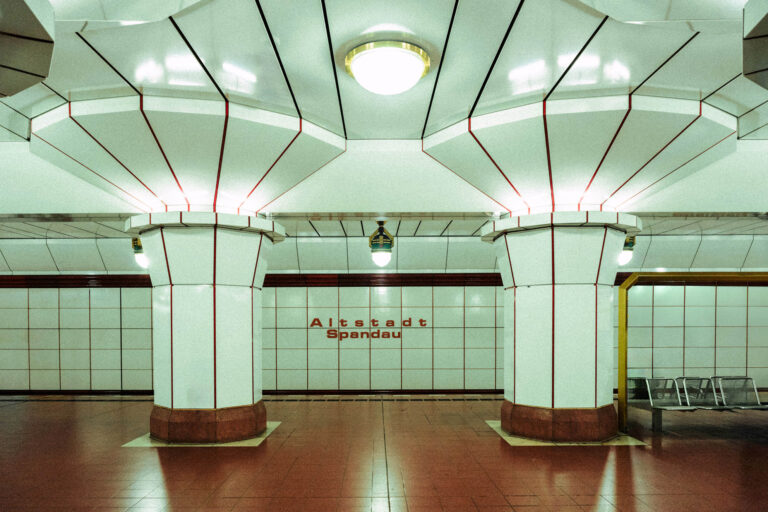
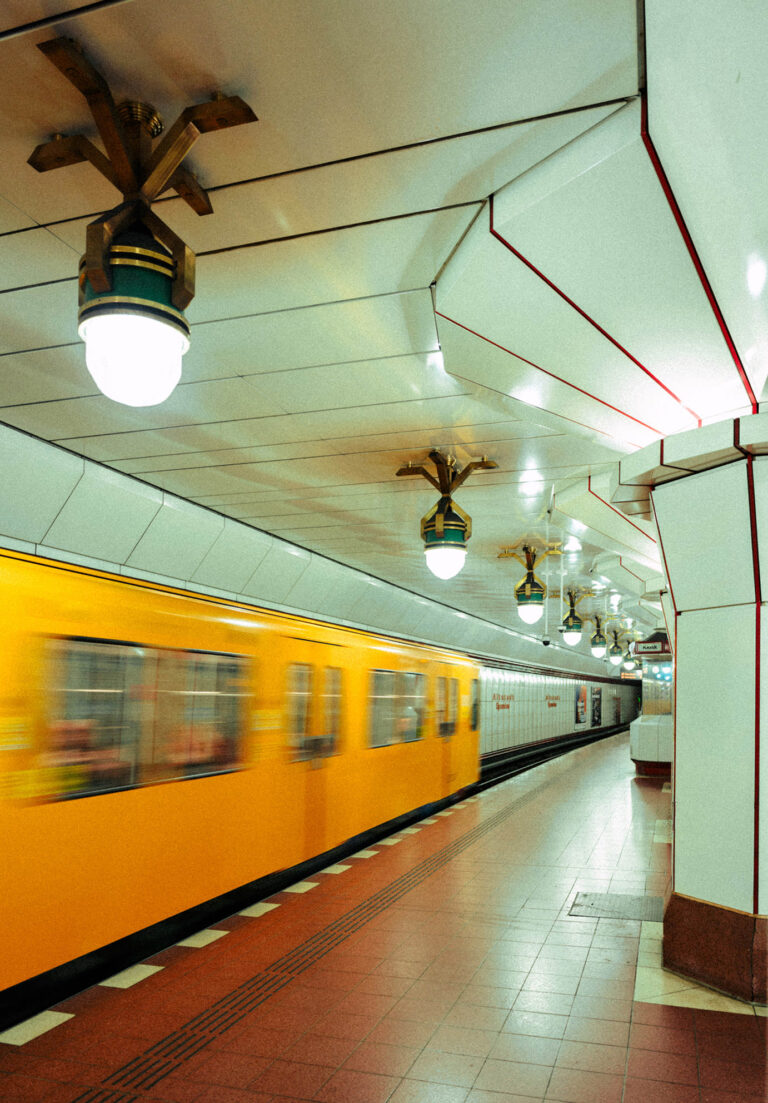
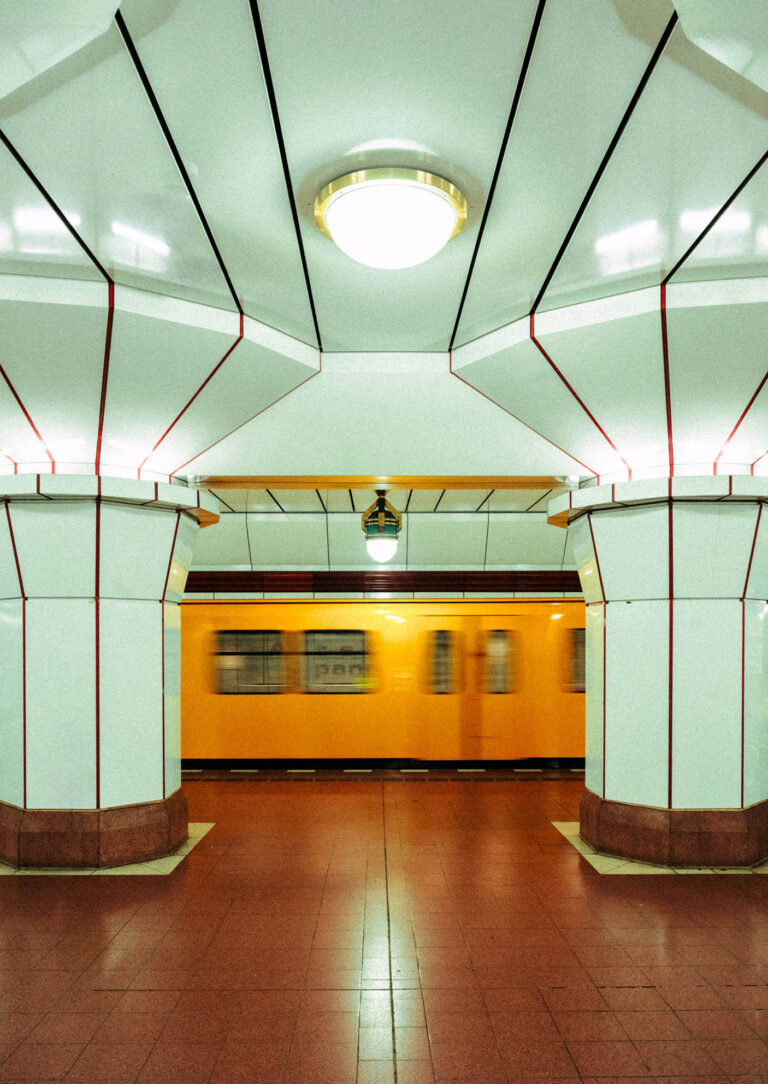
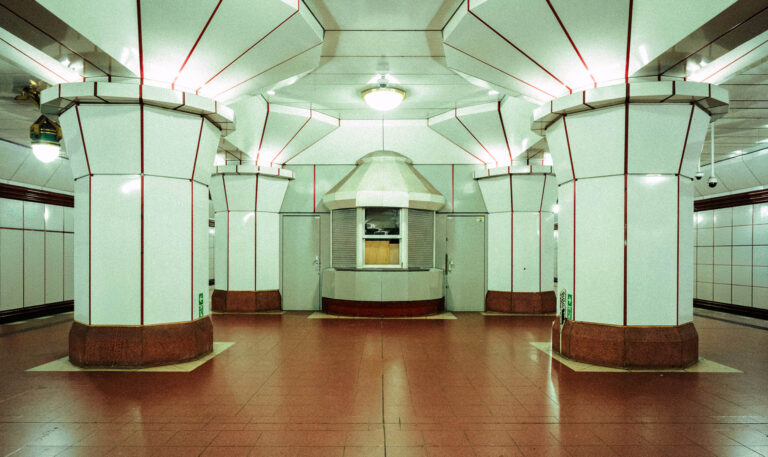
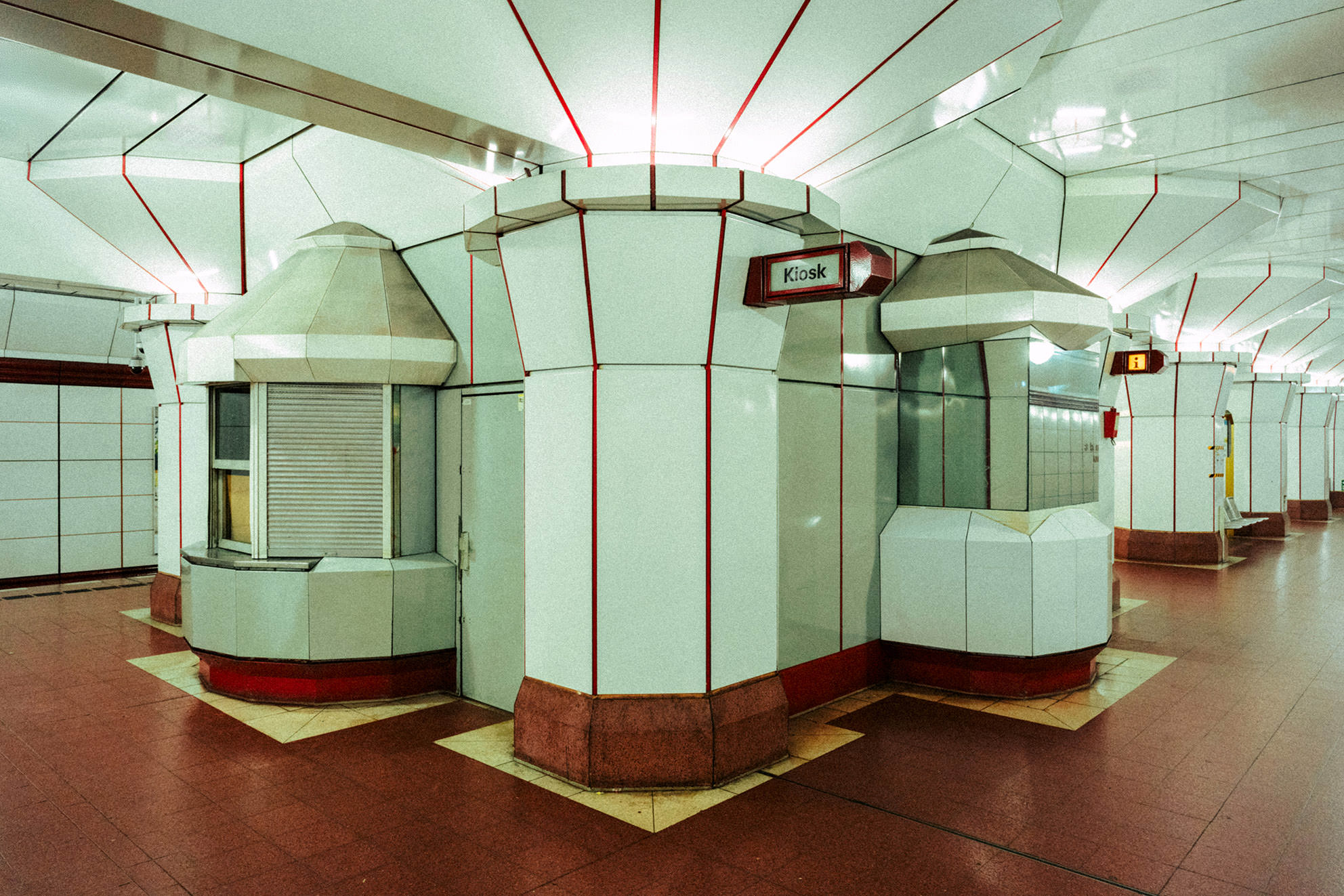
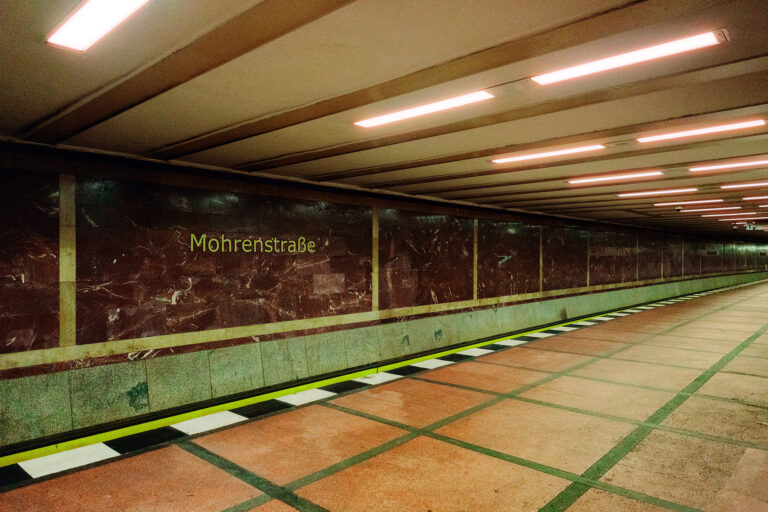
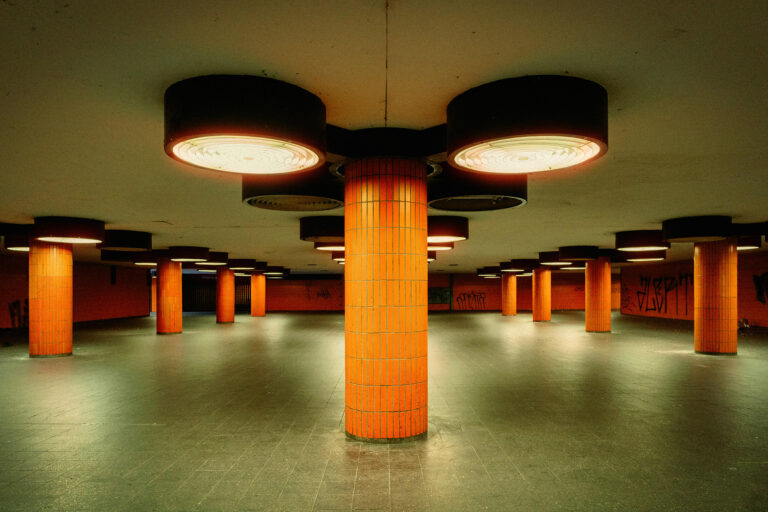
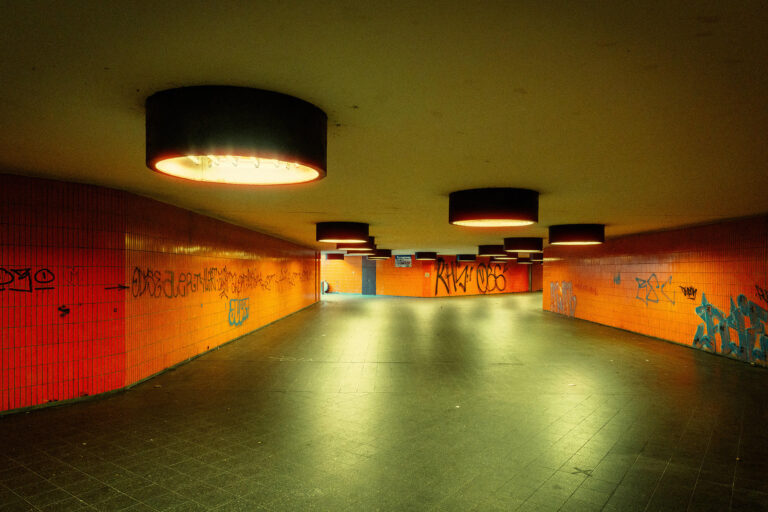
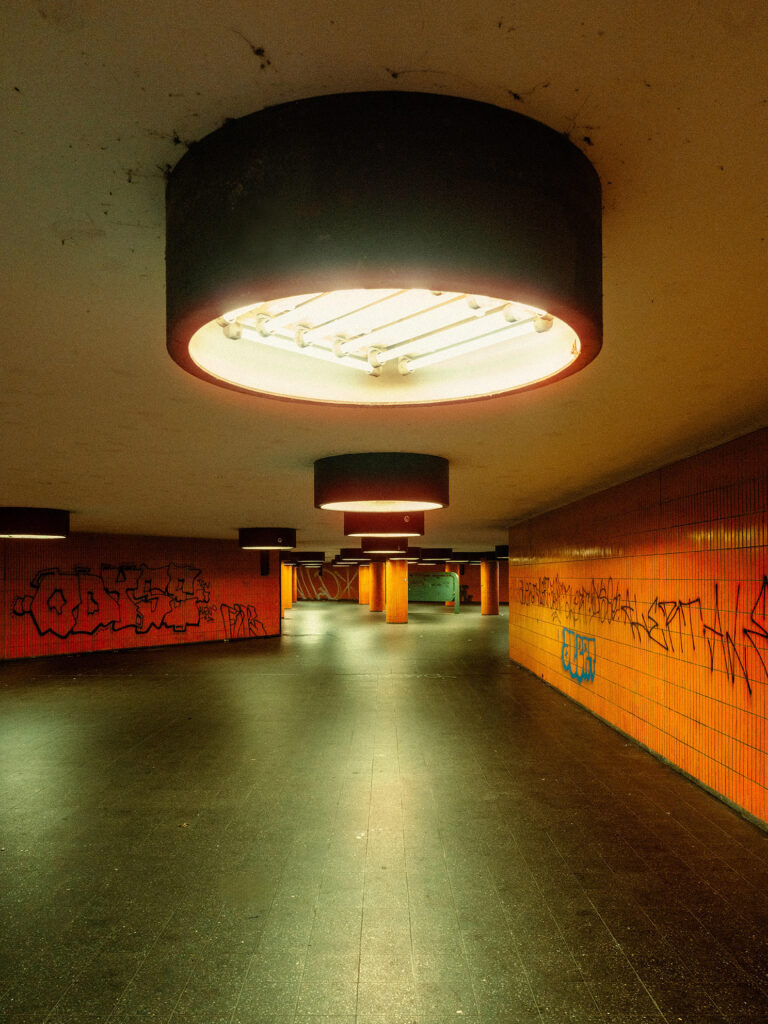
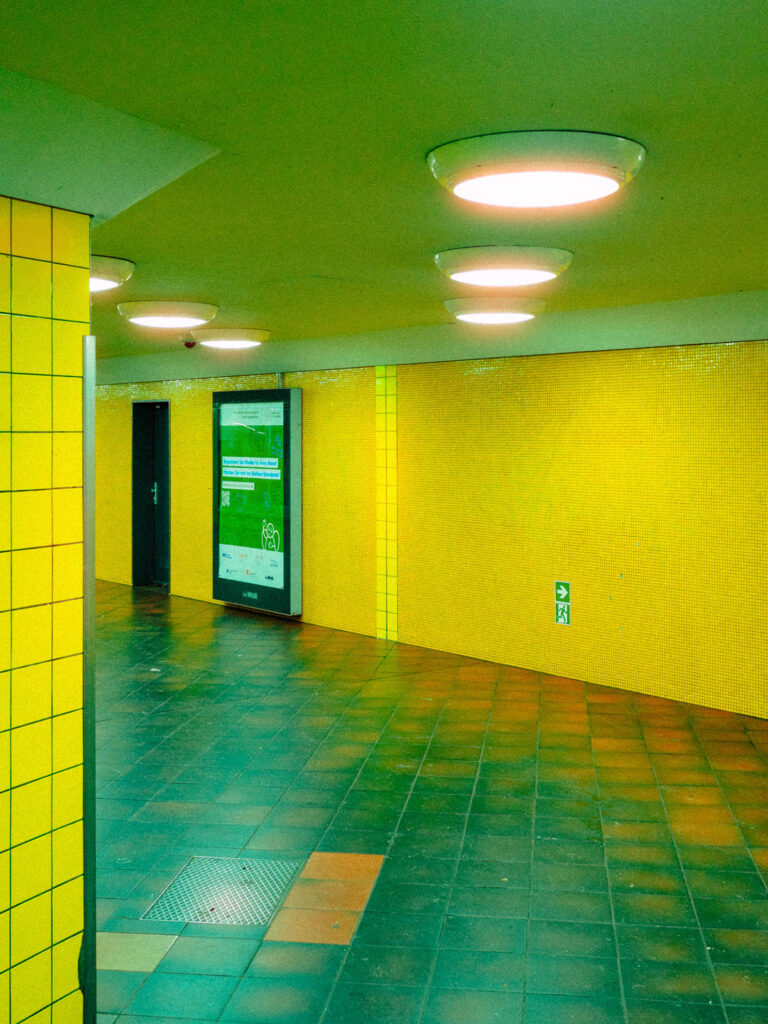
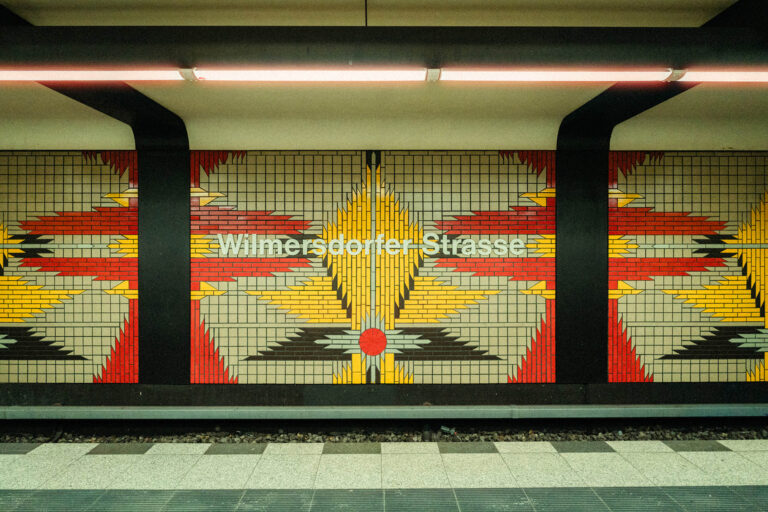
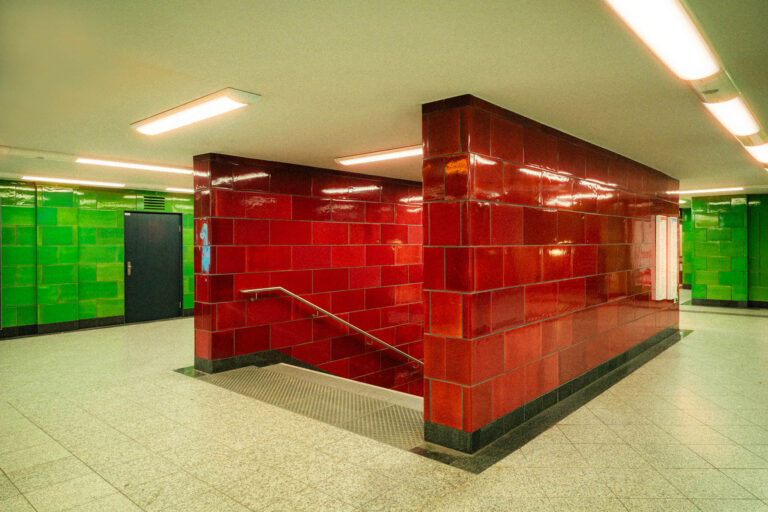
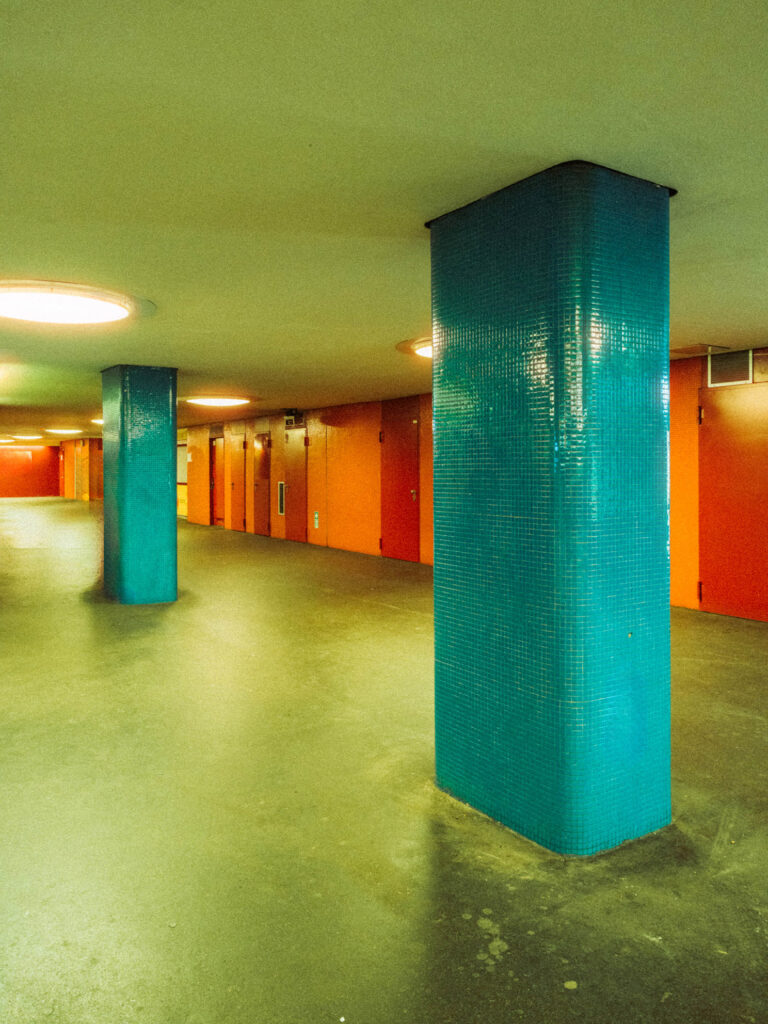
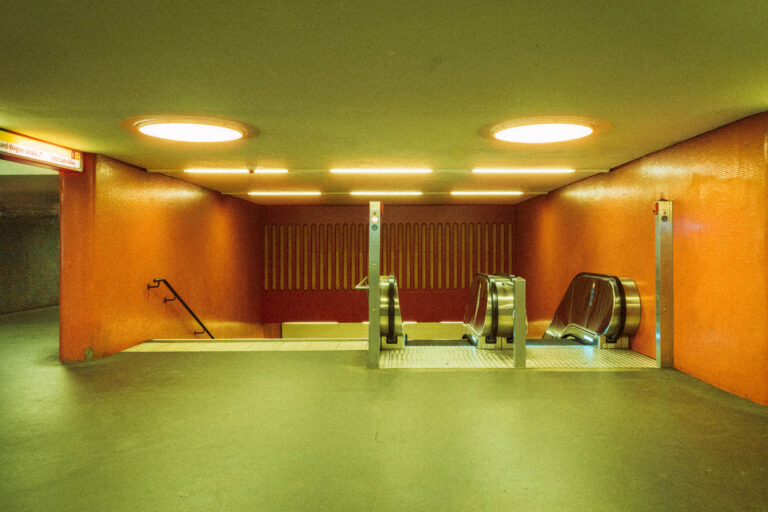
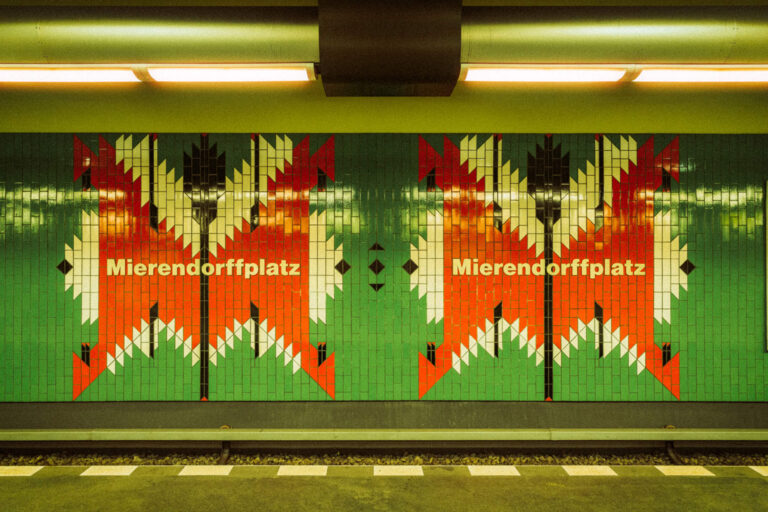
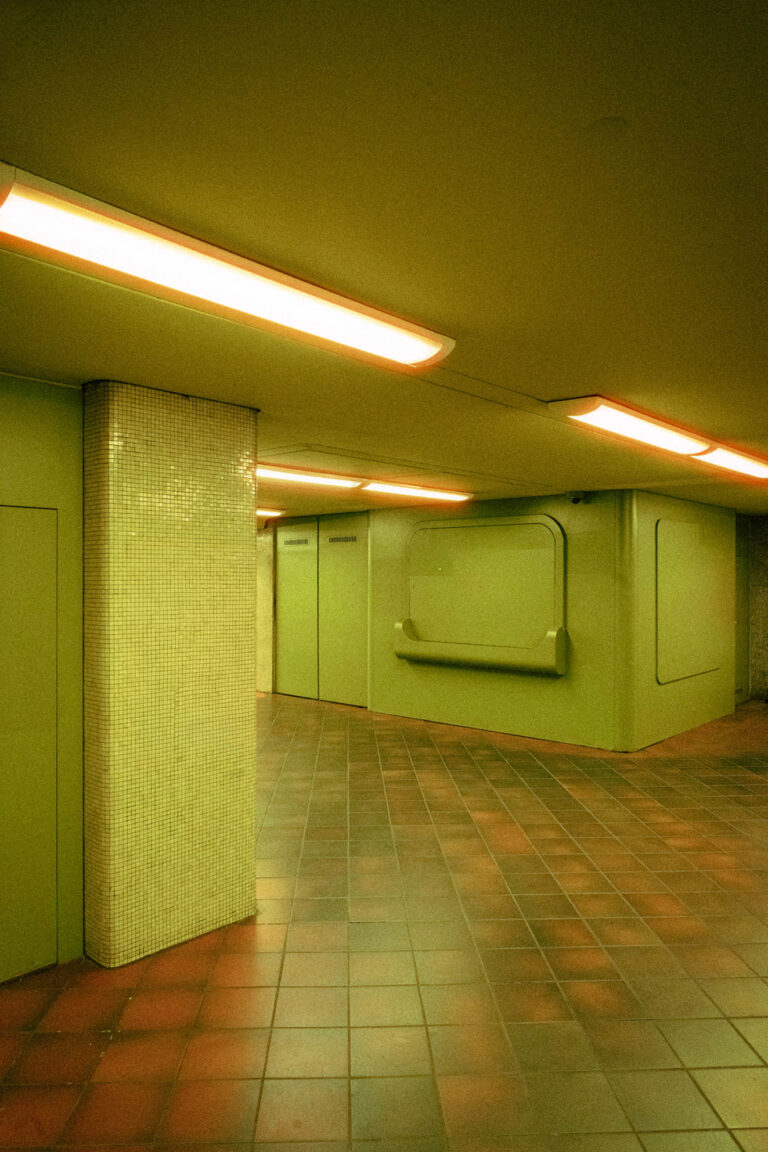
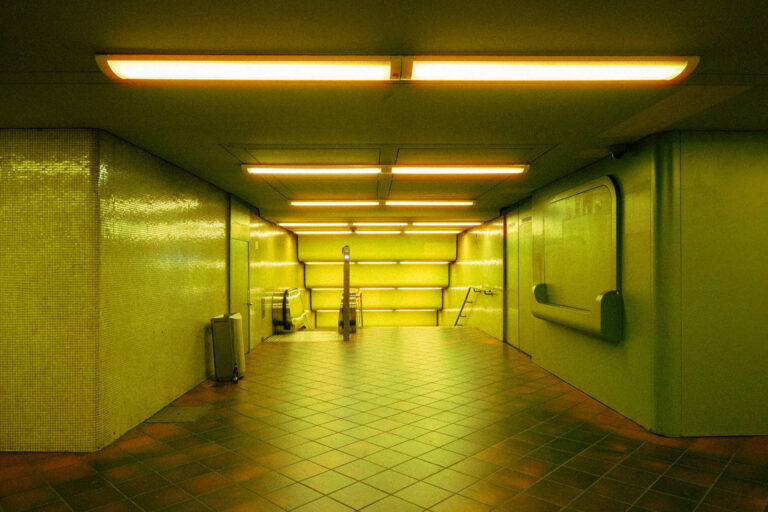
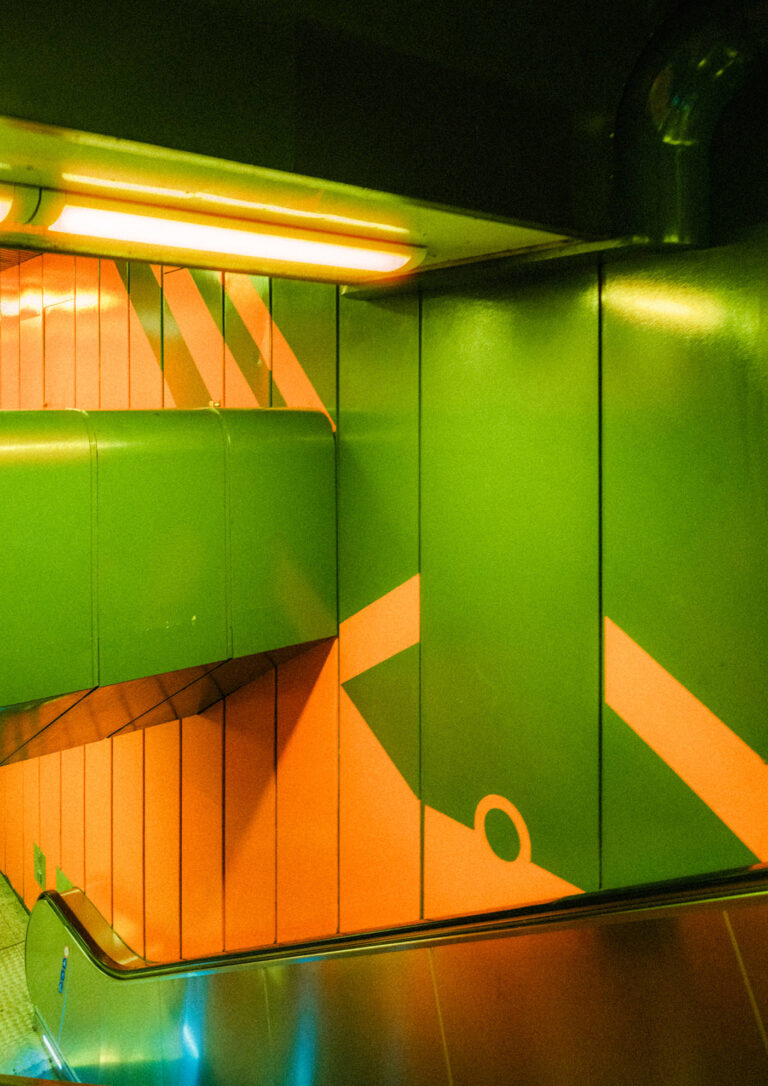
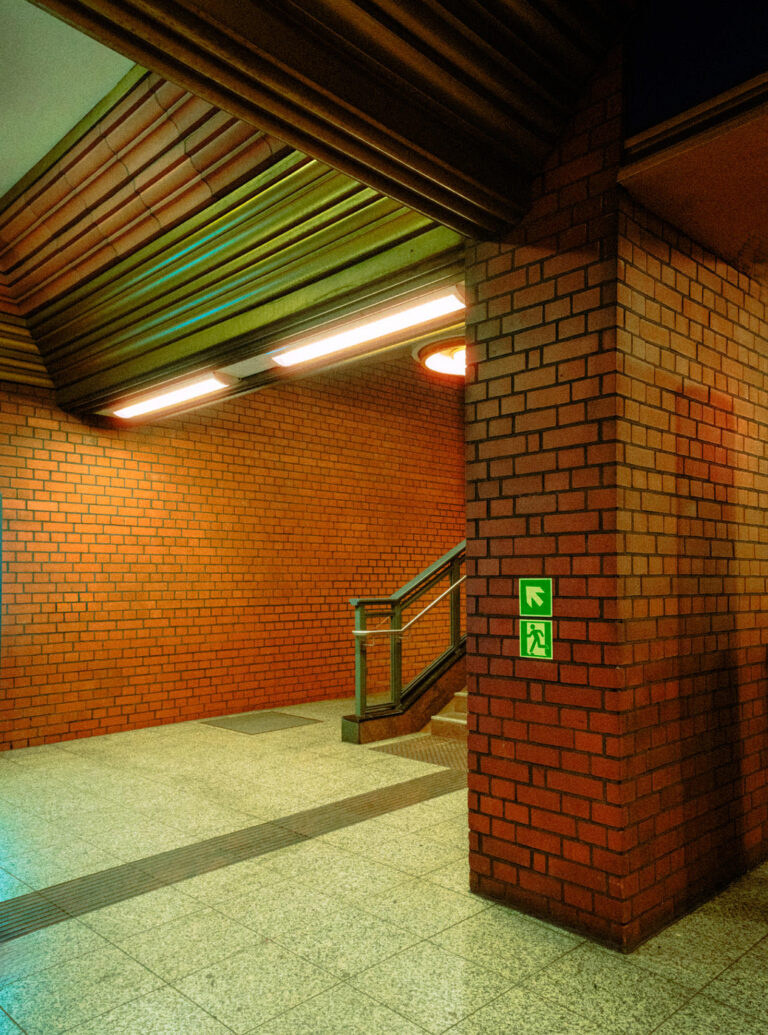
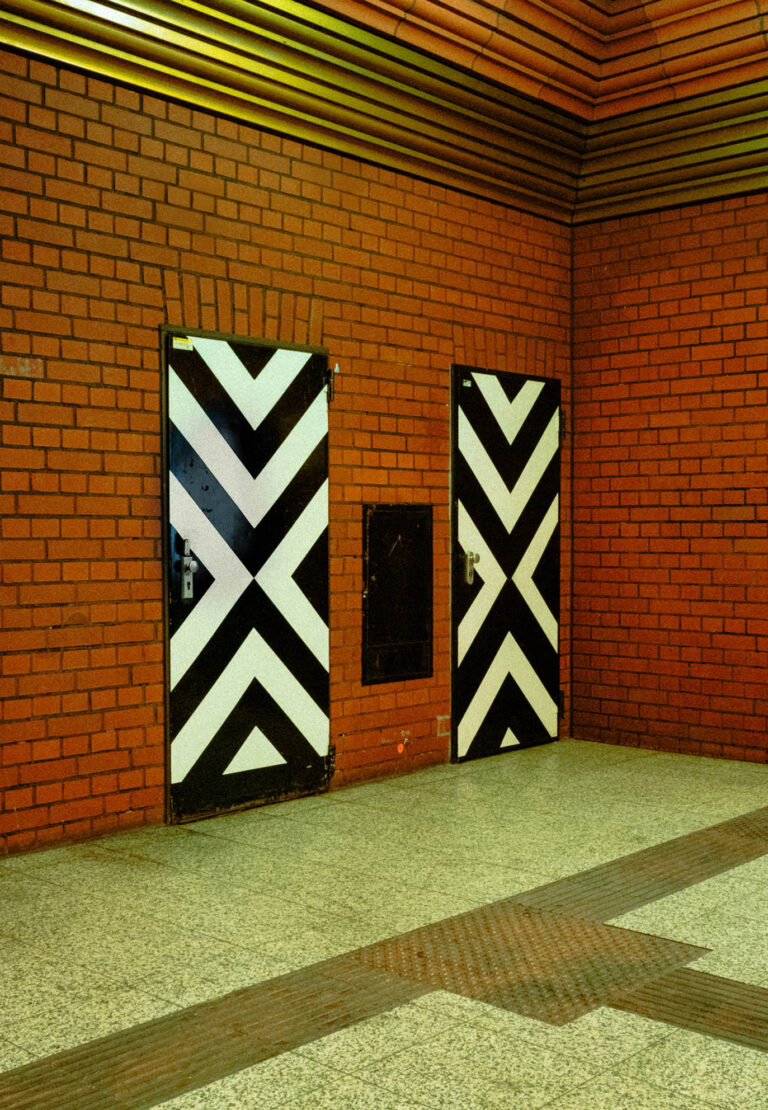
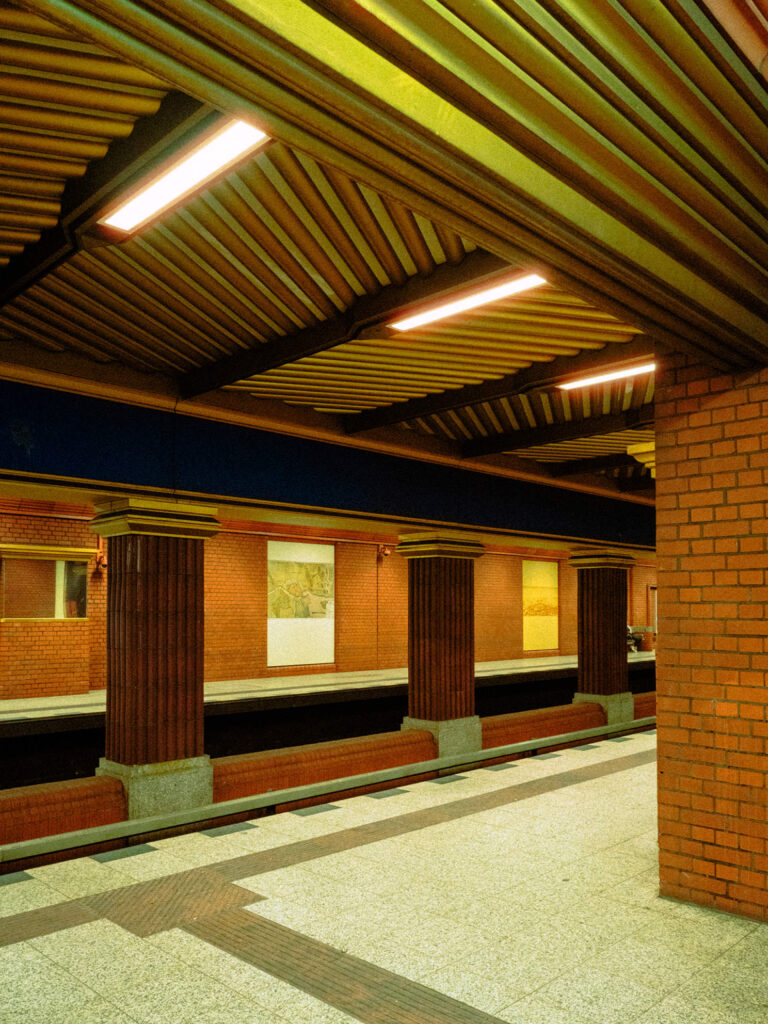
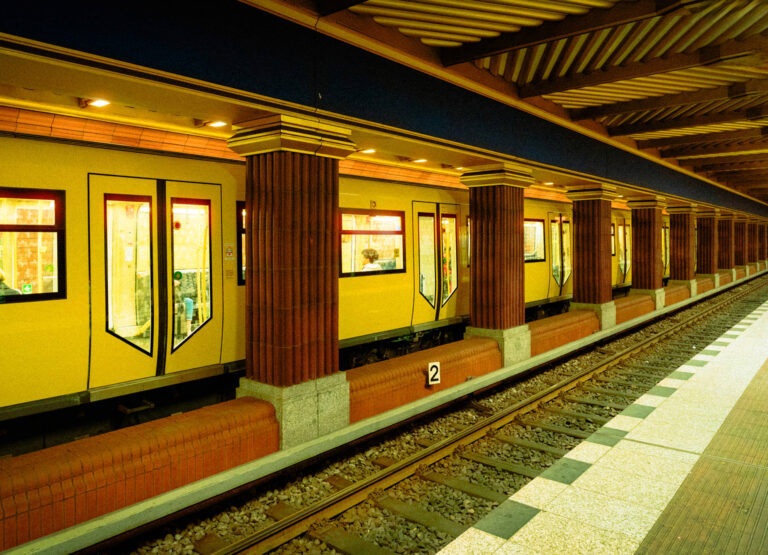
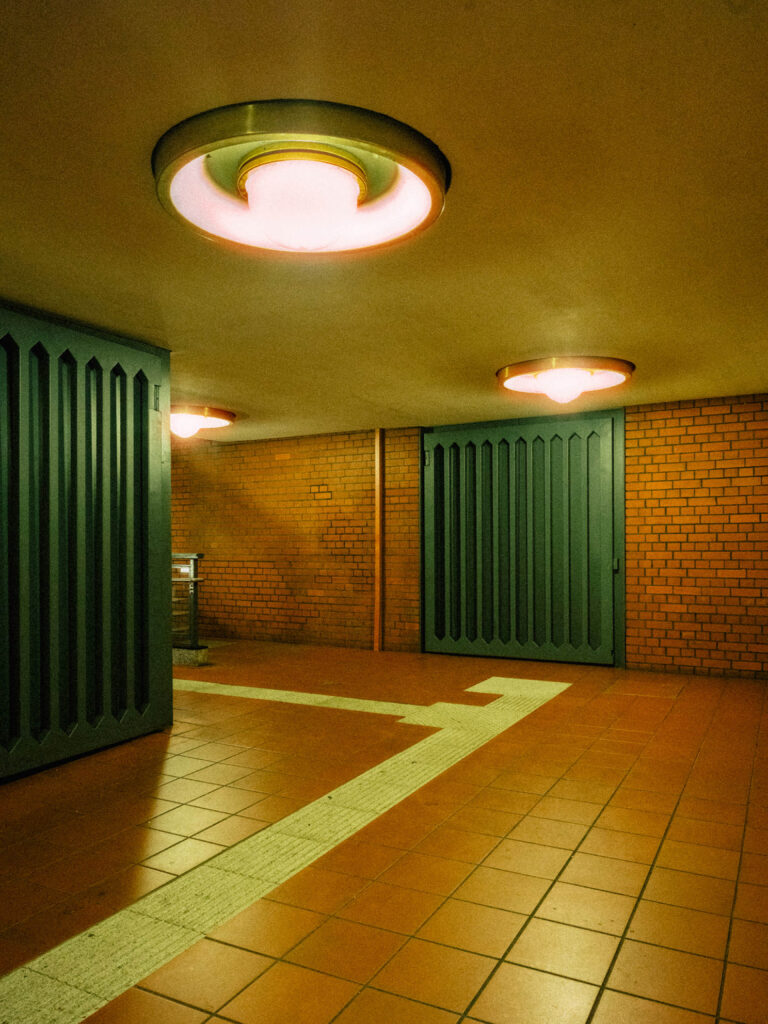
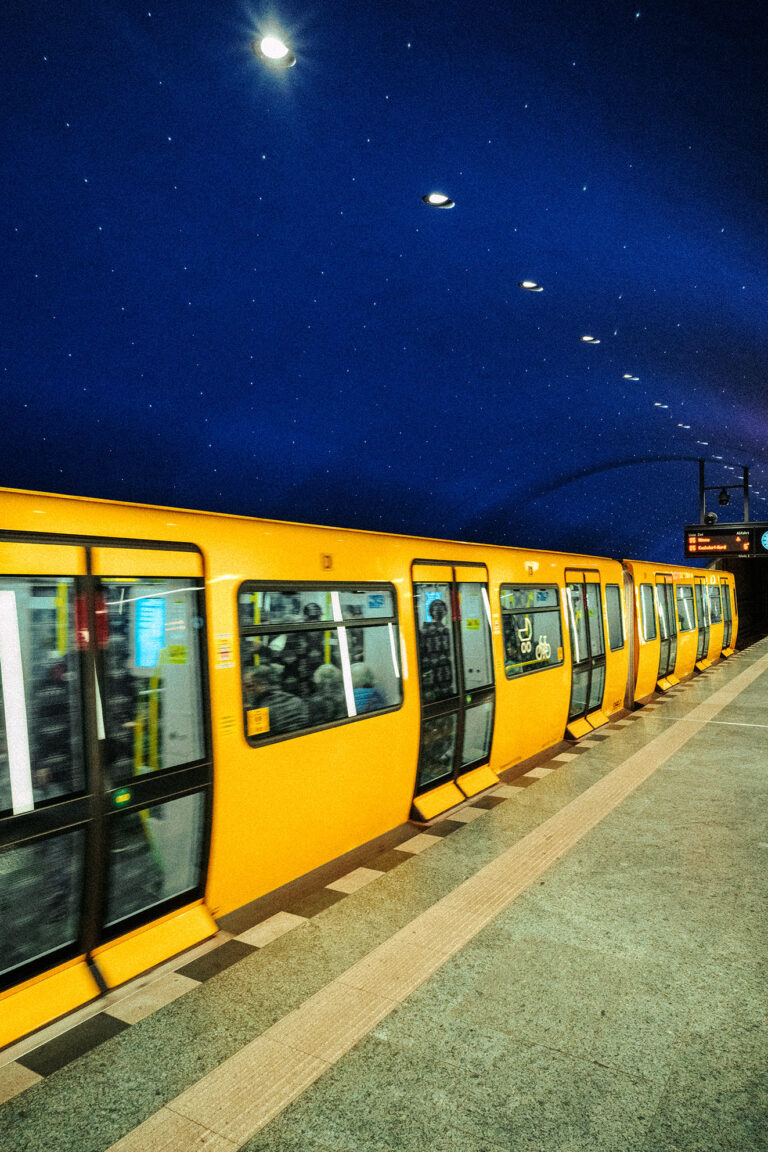
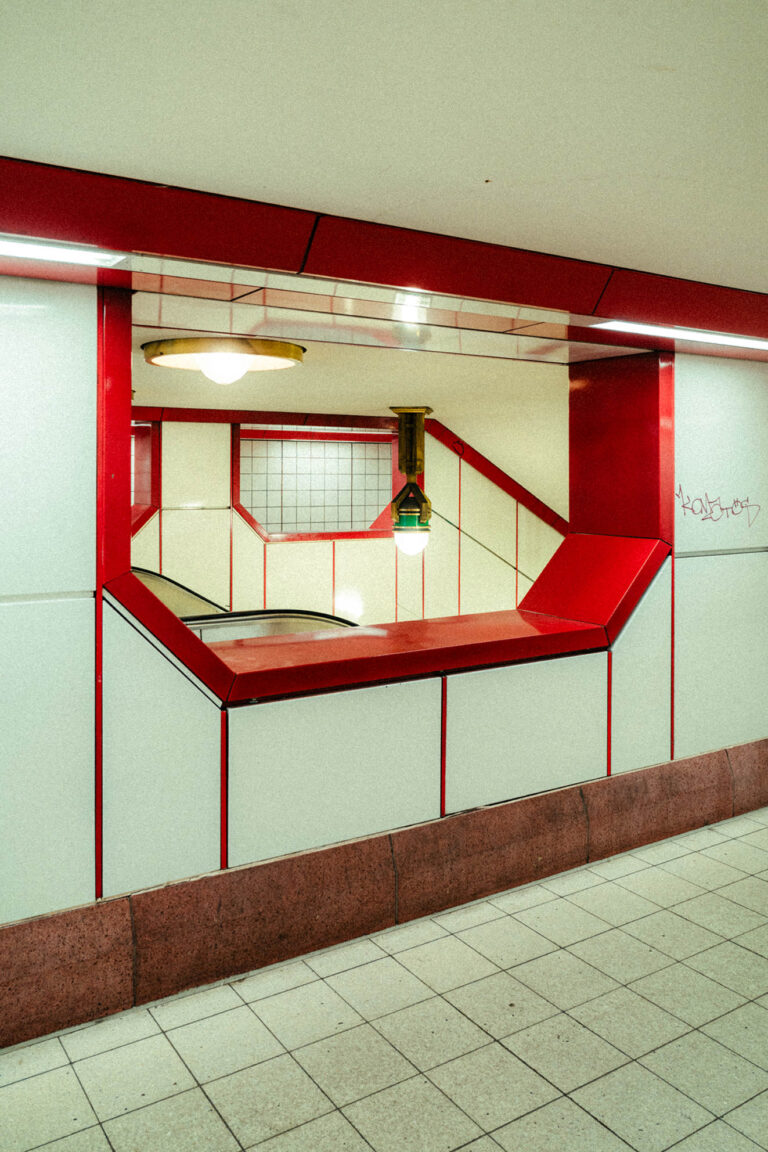
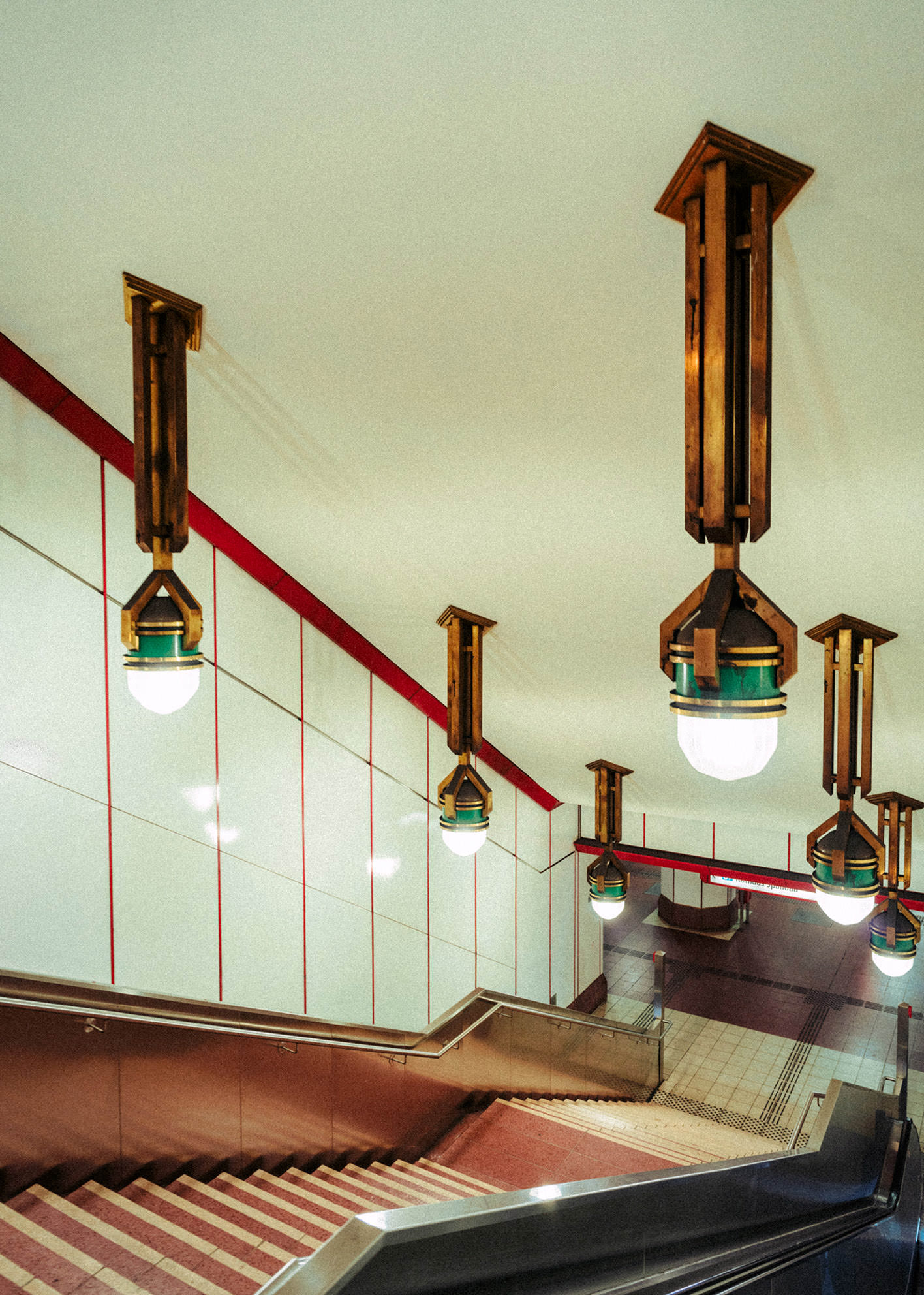
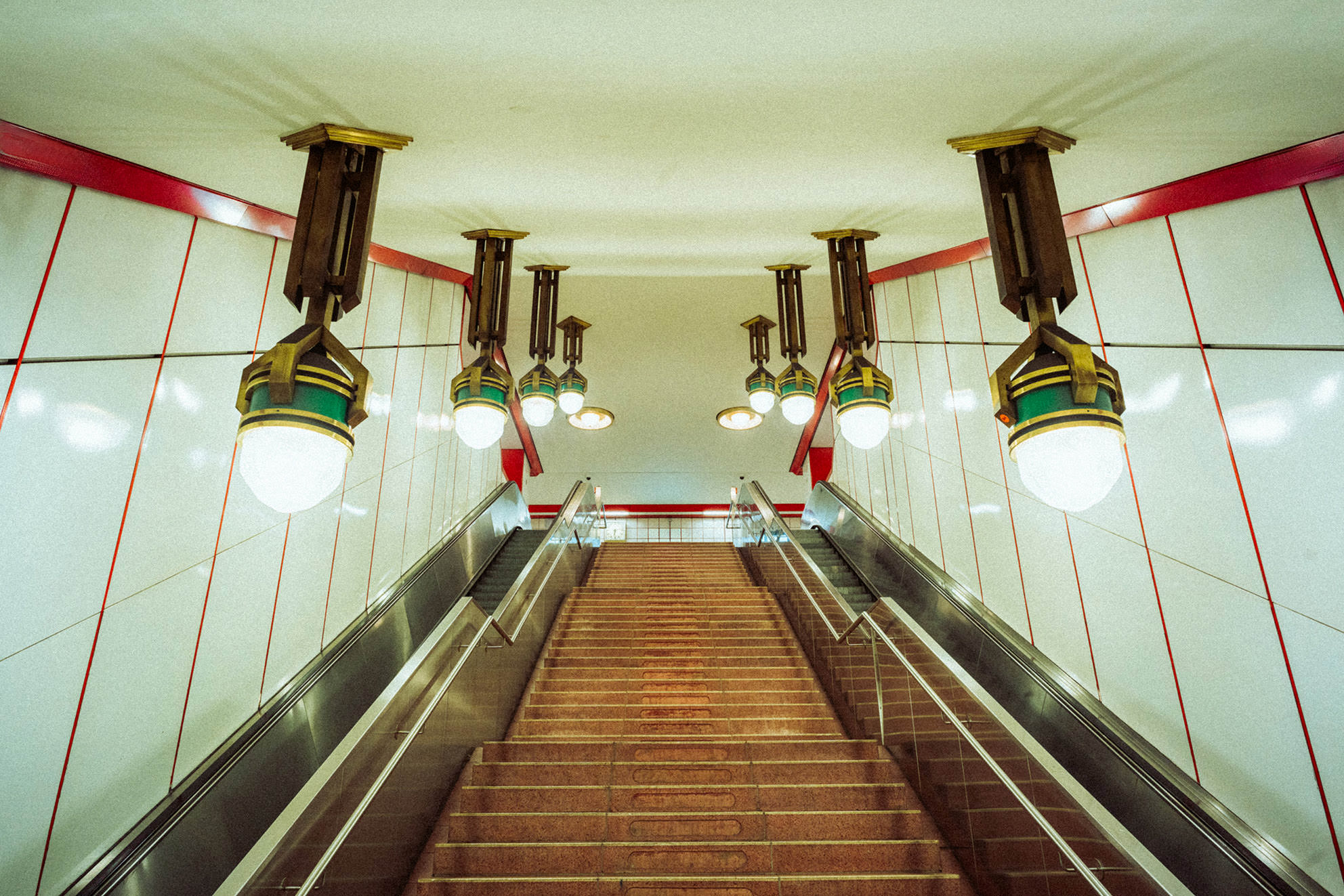
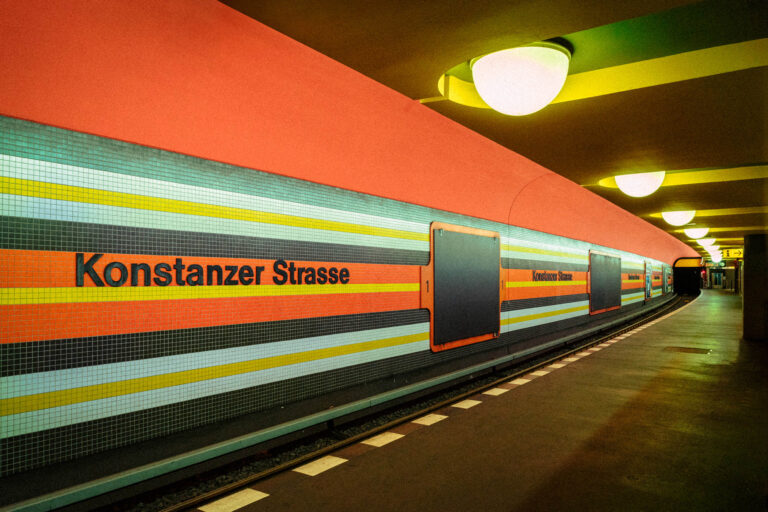
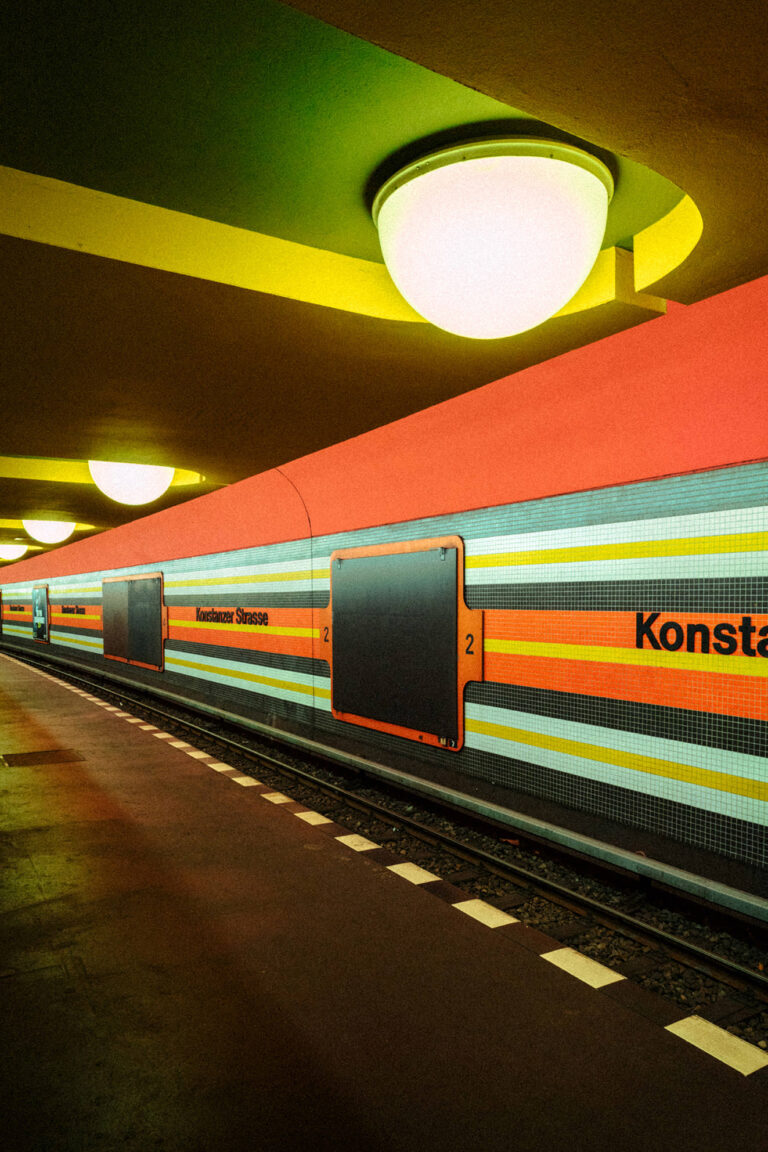
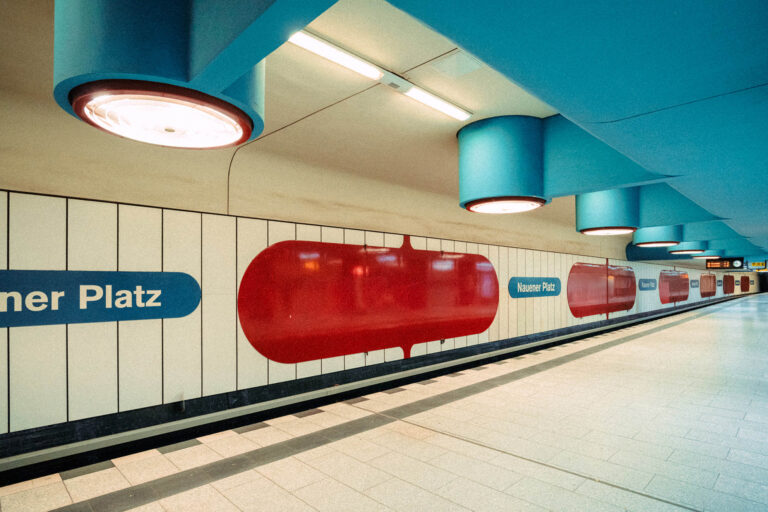
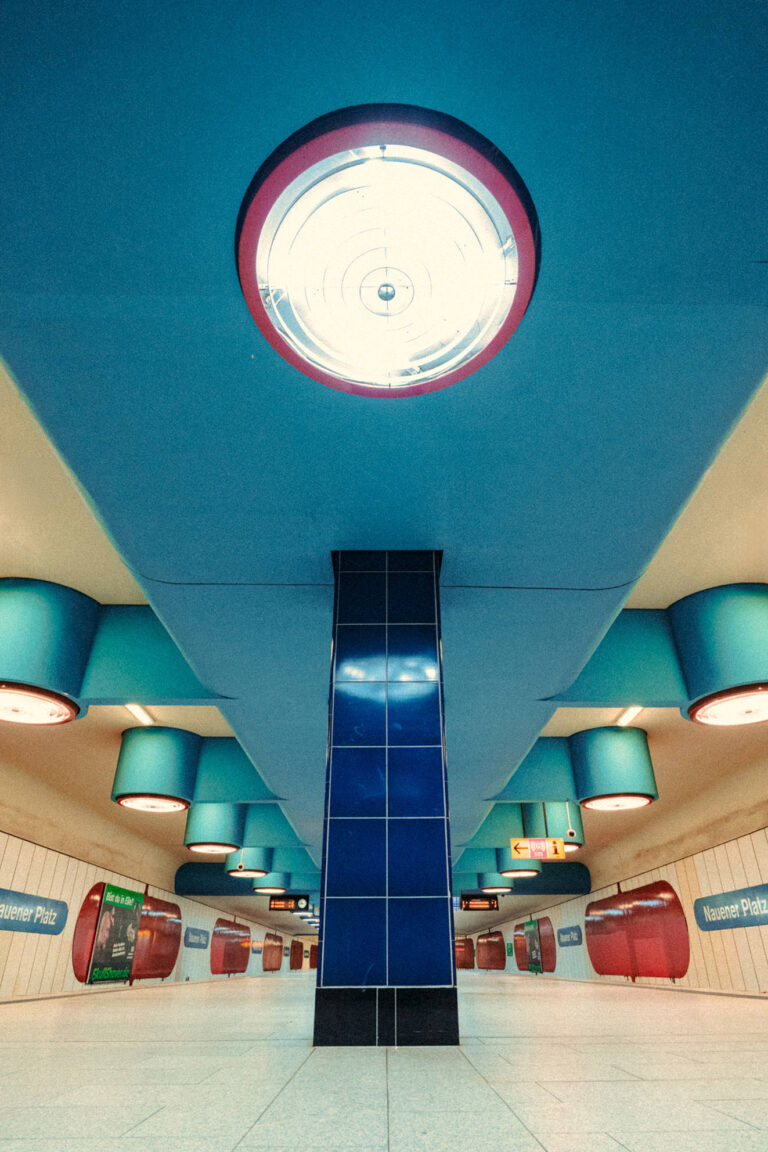
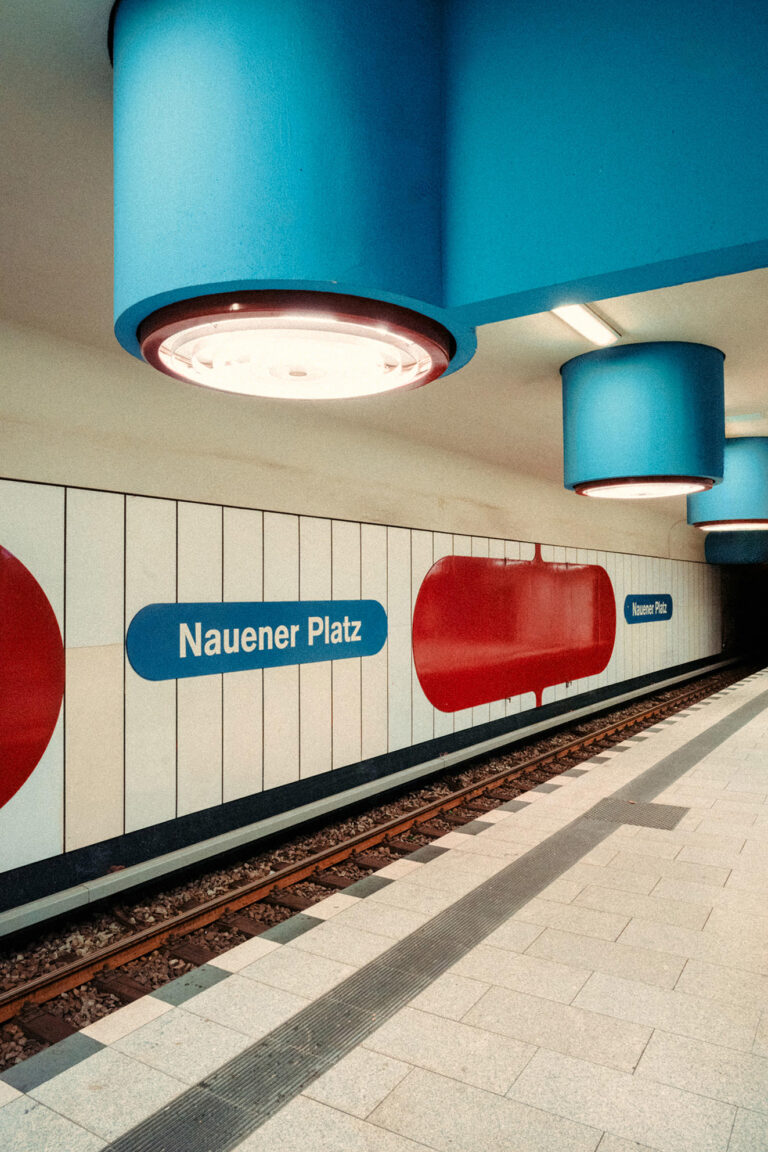
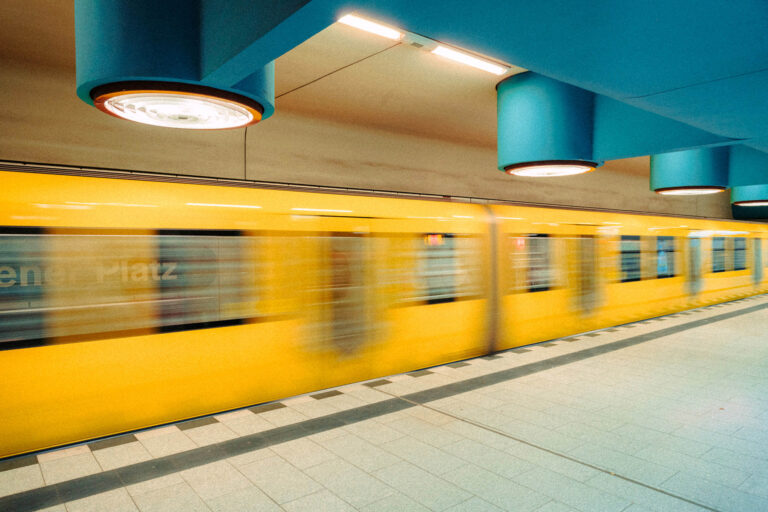
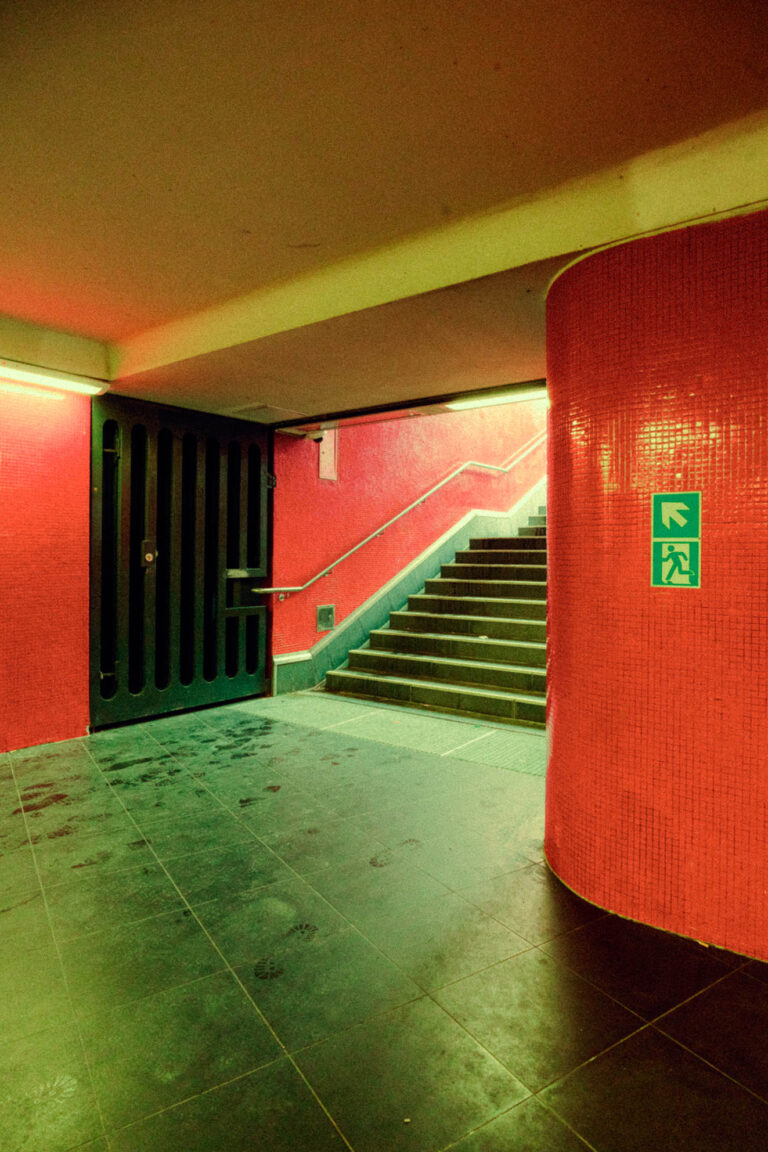
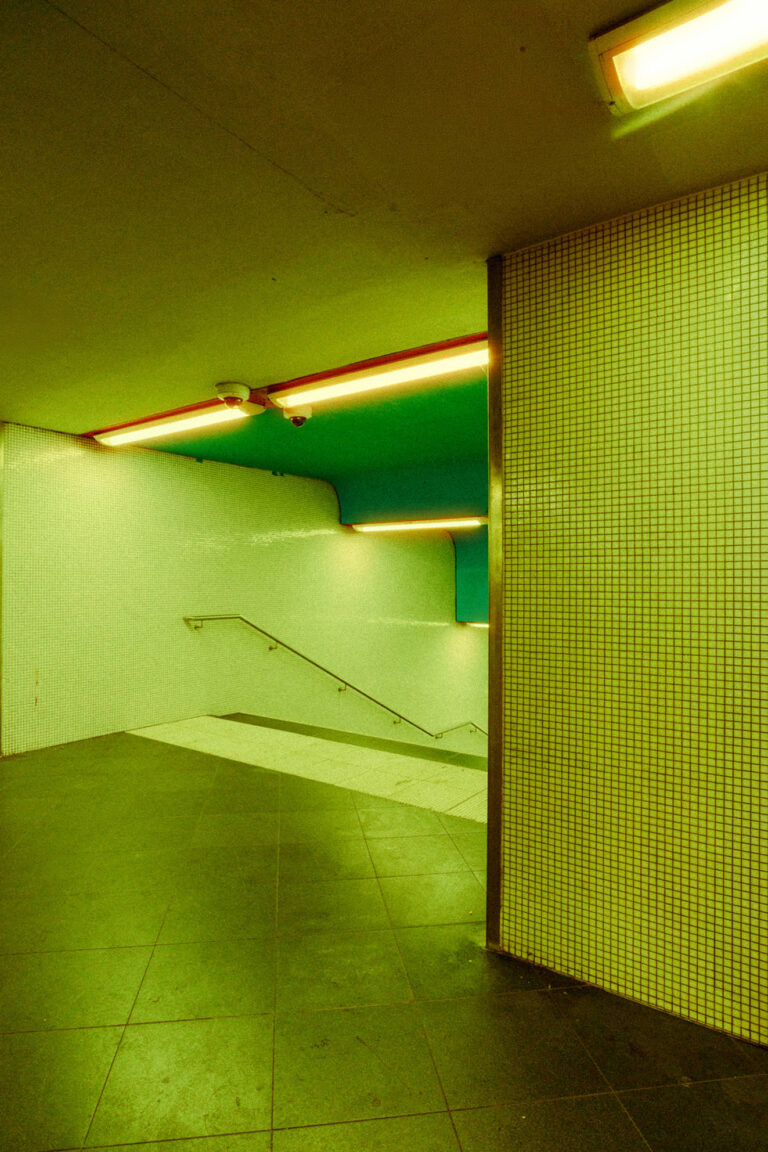
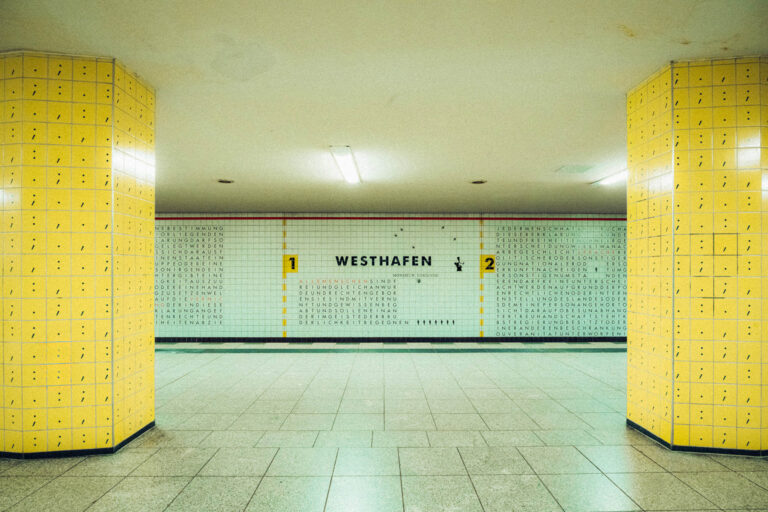
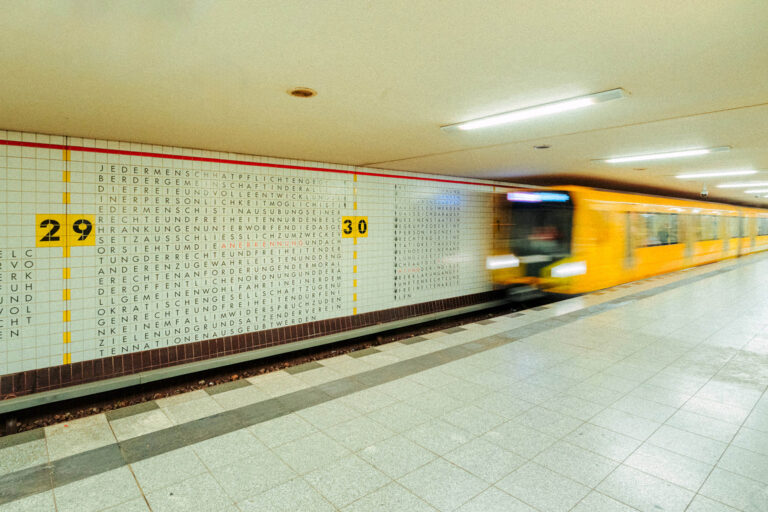
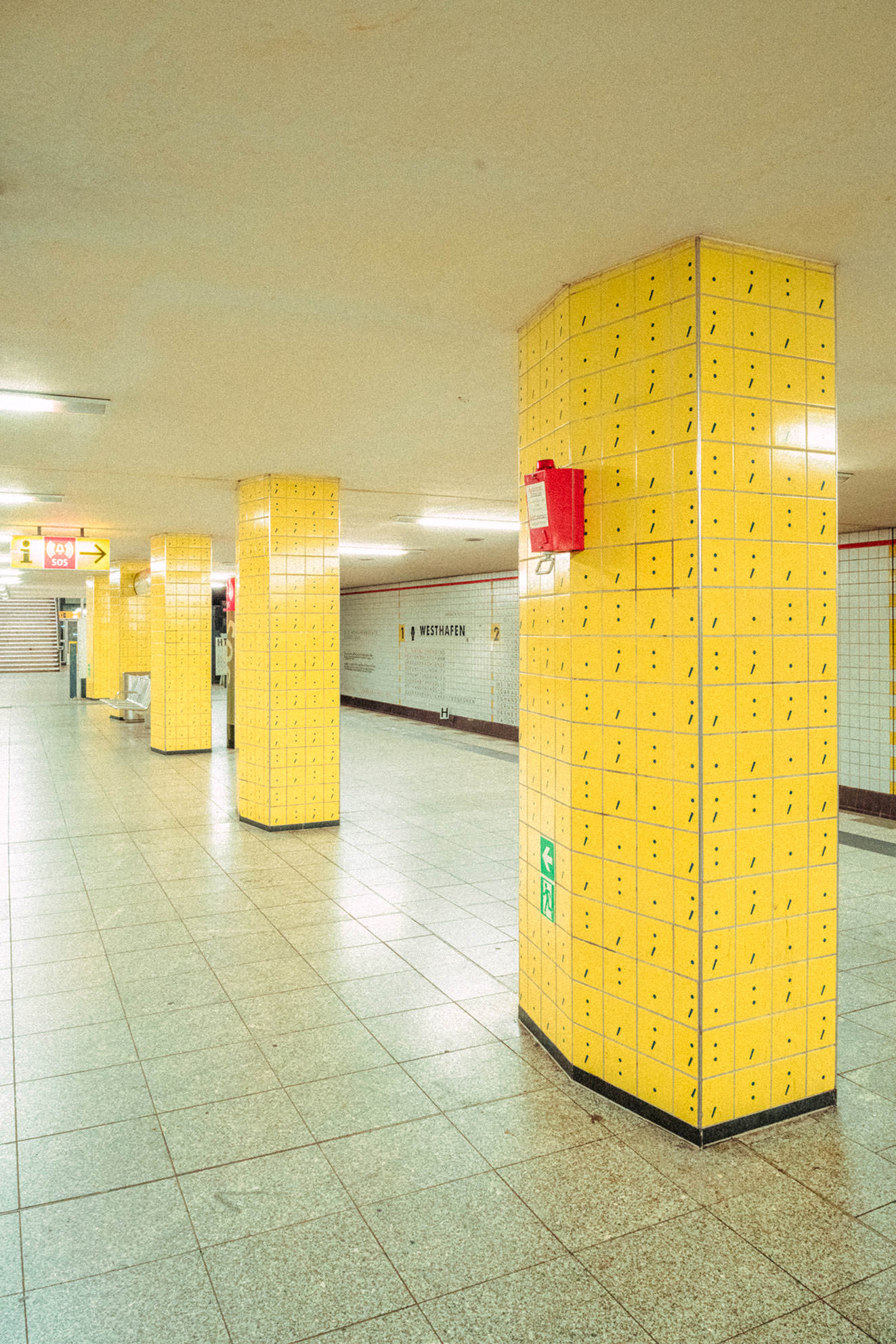
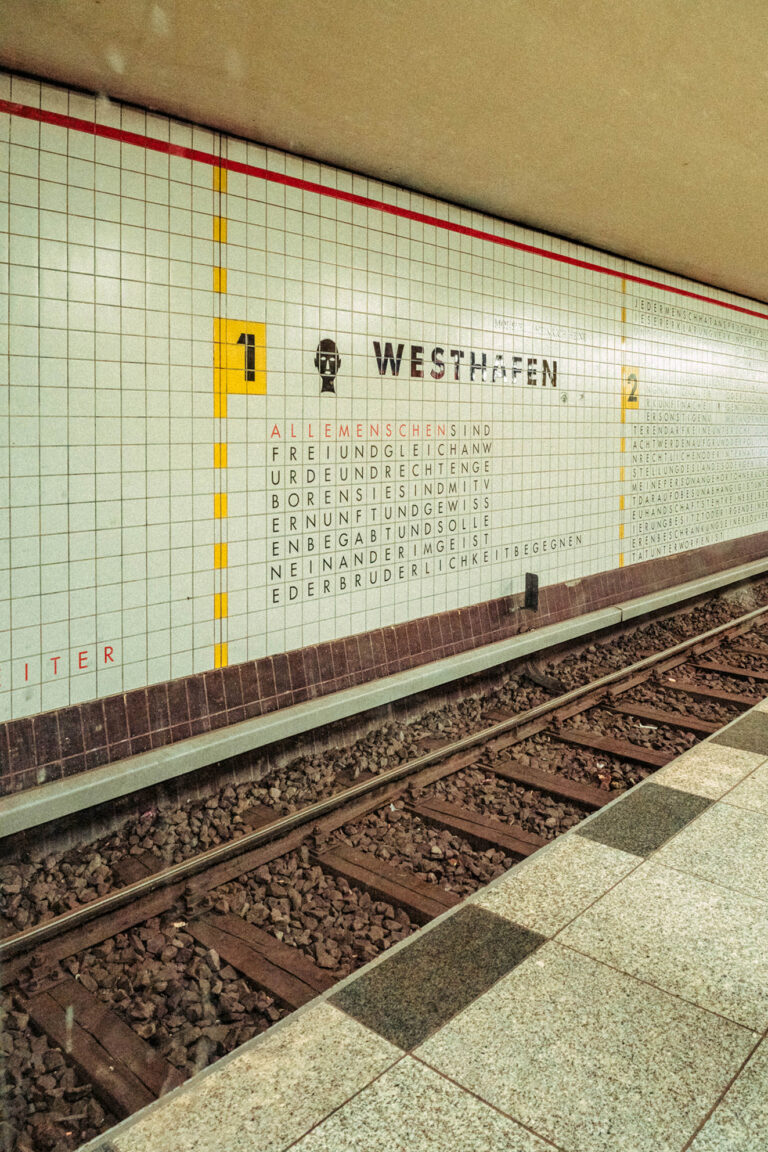
The photographs in “Stationary” were taken in Berlin’s underground system, a network that has evolved over more than a century. Since its opening in 1902, the U-Bahn has been built in distinct phases, from the early 20th-century stations of architect Alfred Grenander, through post-war reconstructions, to the expansions of the 1960s–1980s shaped largely by architects such as Bruno Grimmek and Rainer G. Rümmler. Across this period, a consistent principle emerged: each station should possess a distinct visual identity. This is often expressed through tiled surfaces, colour-coded elements, and a strong graphic language that turns the under- ground into a sequence of recognisable spaces rather than a uniform system.
The tiled walls, repetitive structures, and deliberate use of colour are not incidental, they are part of an architectural approach that combines orientation with identity. What appears at first as pure function reveals itself as a curated visual environment, shaped by decades of design decisions and changing architectural ideas.
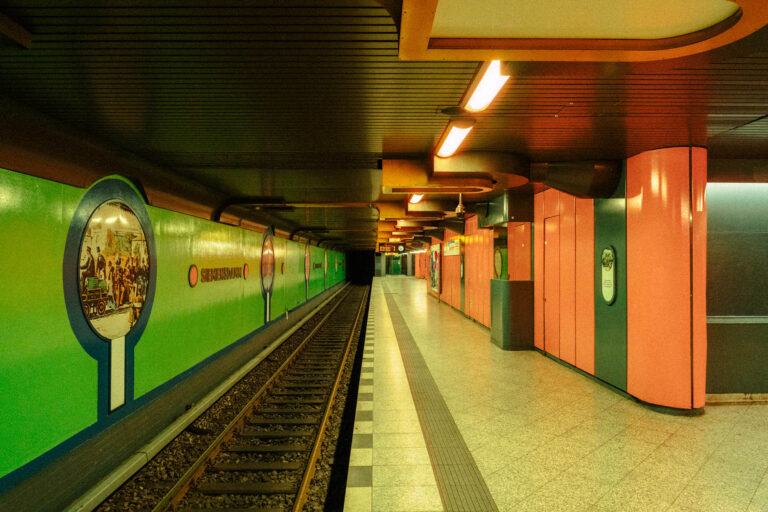
These photographs focus on a moment that usually passes unnoticed. After a train has departed and before the next arrives, the platform empties. For a brief interval, the constant flow is interrupted. Movement ceases. In this short span of time, the stations exist differently. They are no longer transit spaces but places in their own right – quiet, suspended, almost self-contained. The visual order of tiles, lines, and surfaces becomes more pronounced. Sound recedes to a low, indistinct presence: a distant hum, the residual noise of the system. Then, gradually, footsteps reappear, approaching from afar, and the cycle resumes.
The images hold this moment of stillness. They isolate a condition in which a space designed for movement becomes temporarily motionless – “stationary”. What is shown is not the city in transit, but the infrastructure at rest: a brief, repeating pause within a continuous system.