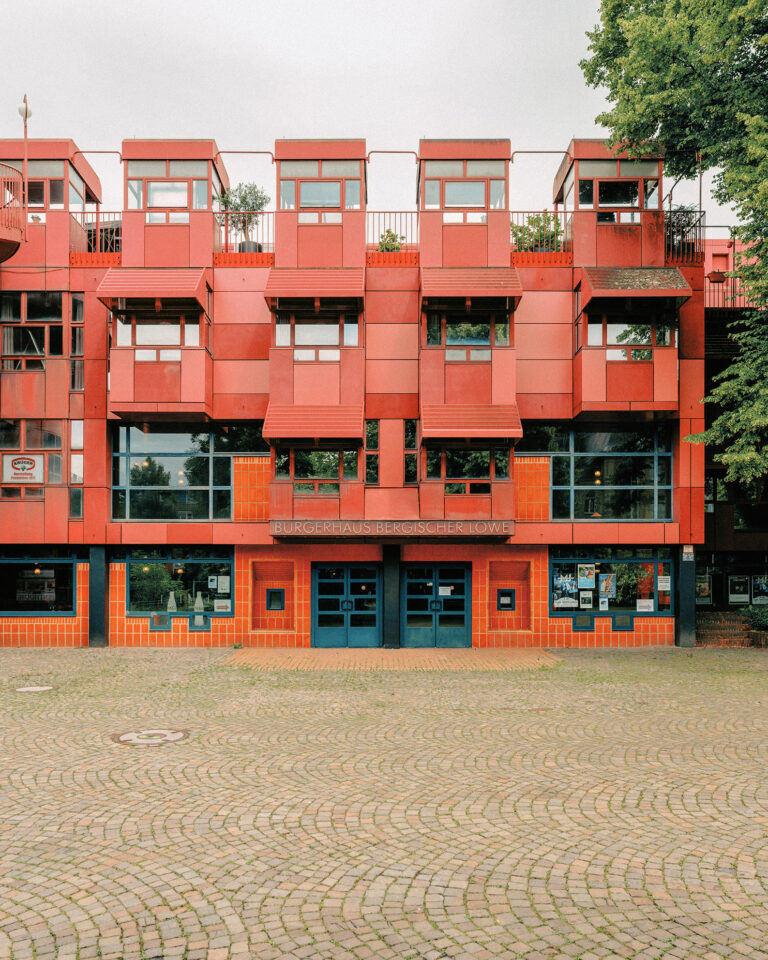
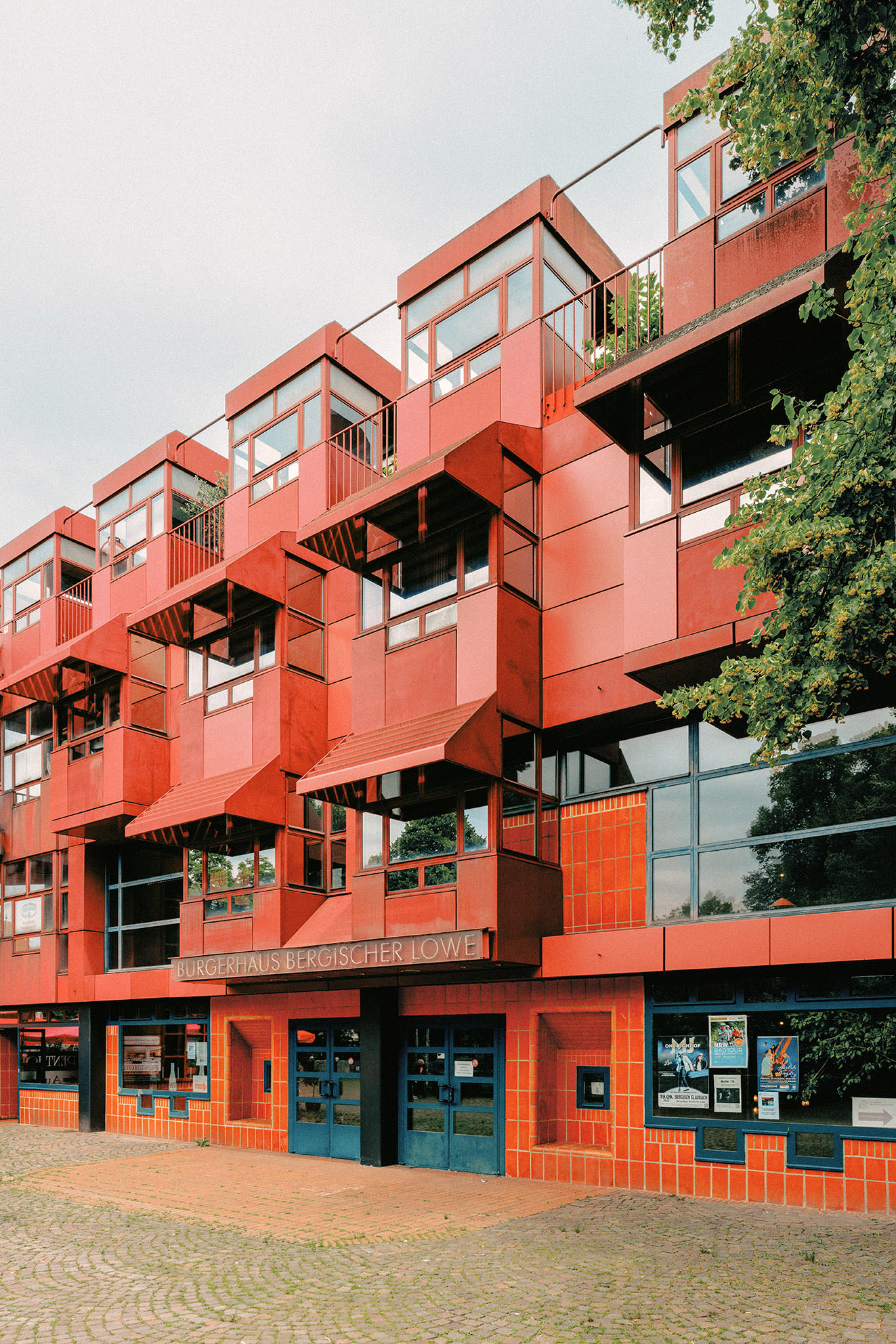
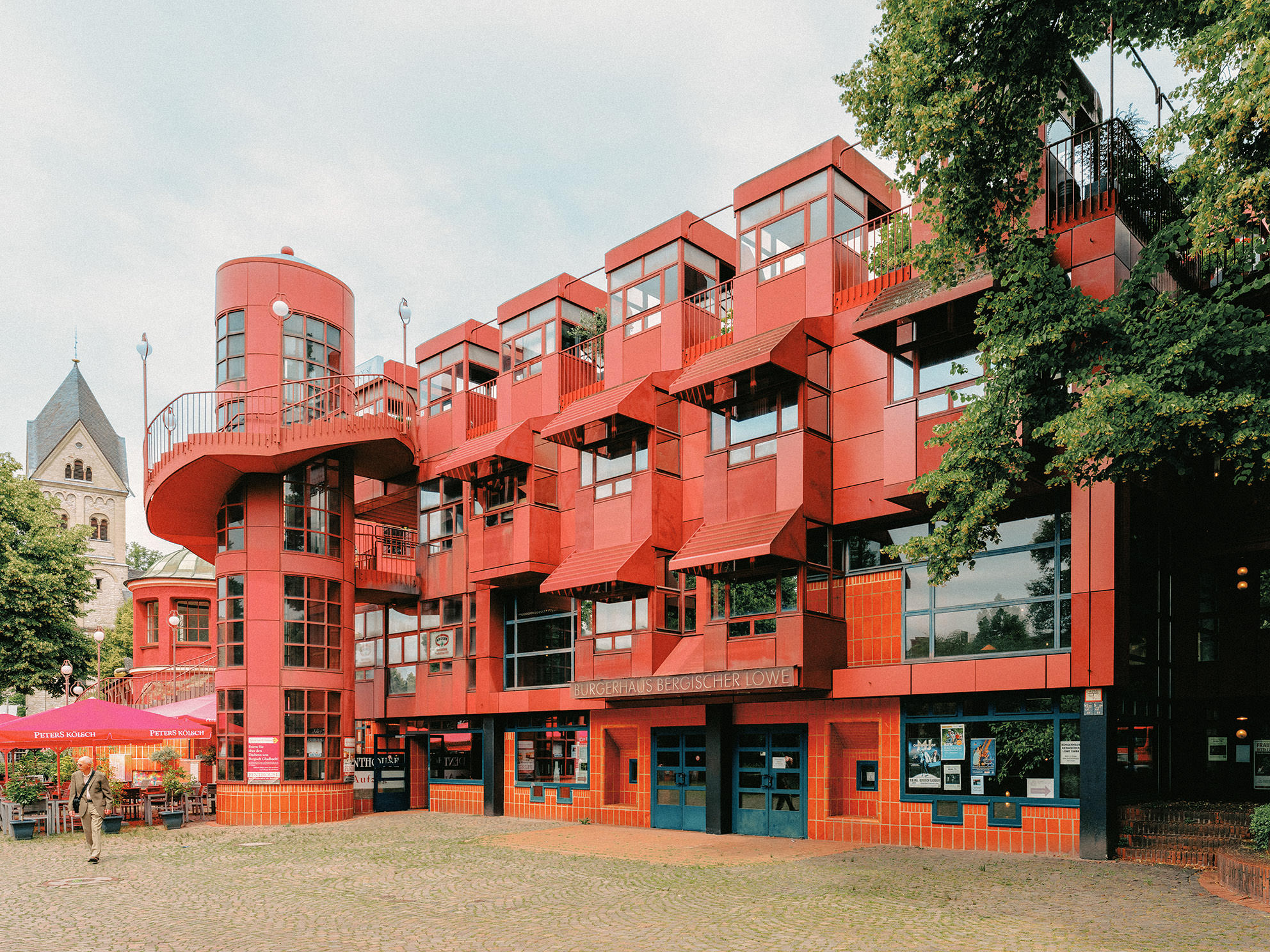
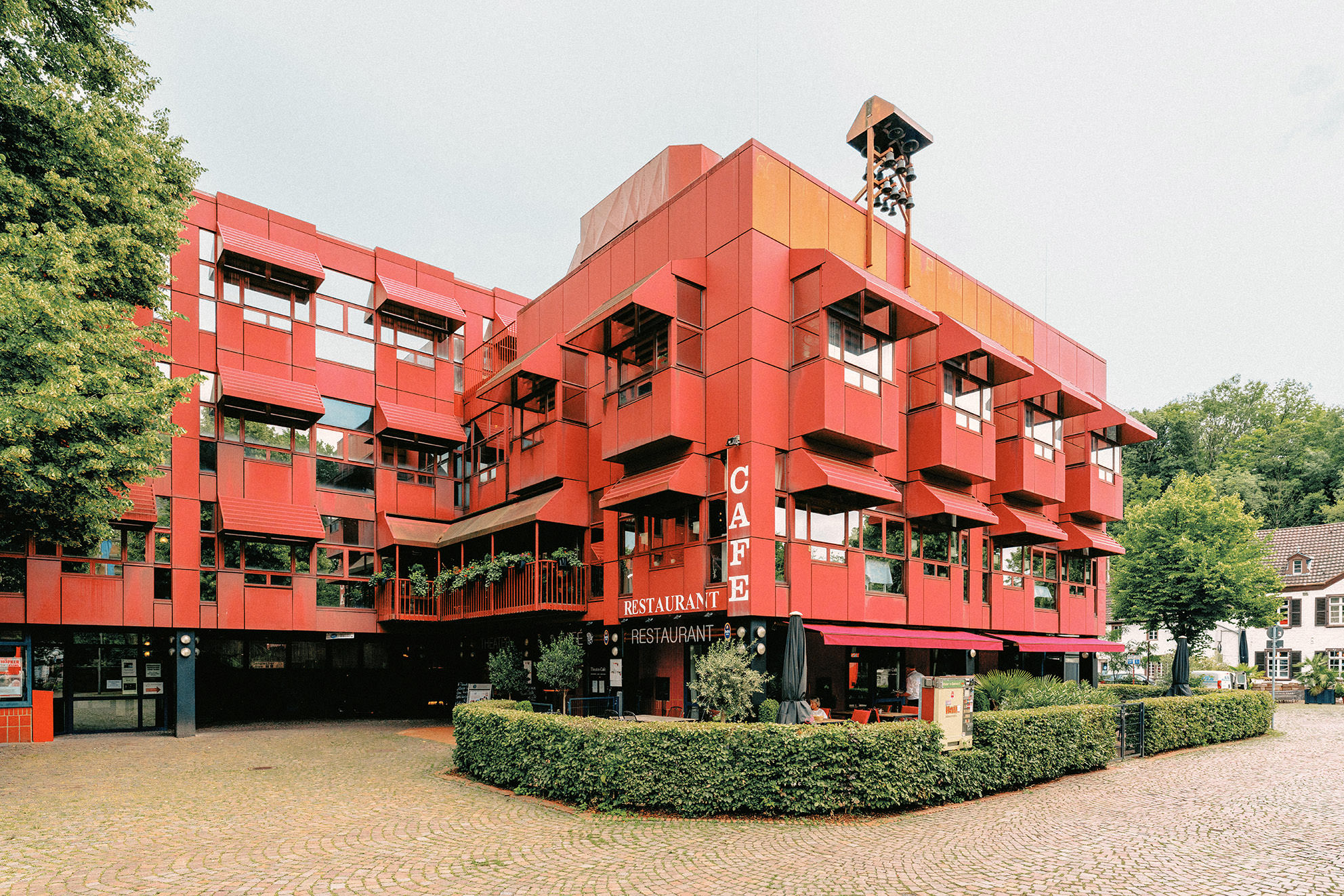
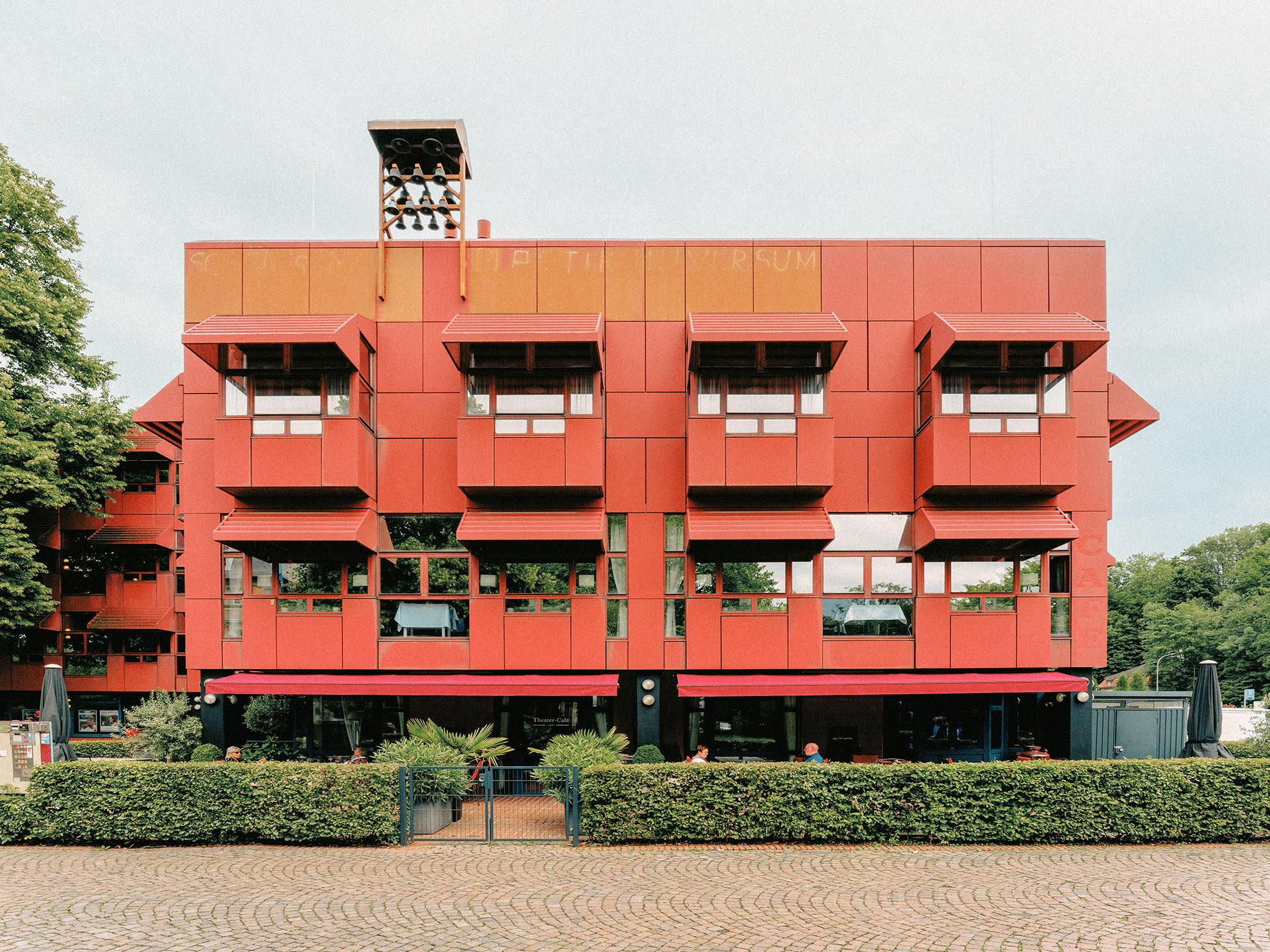
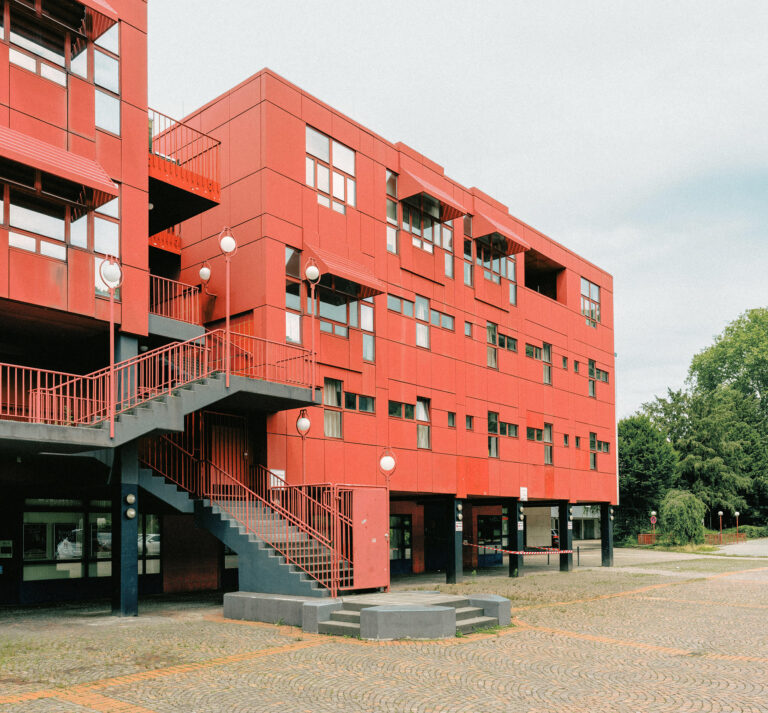
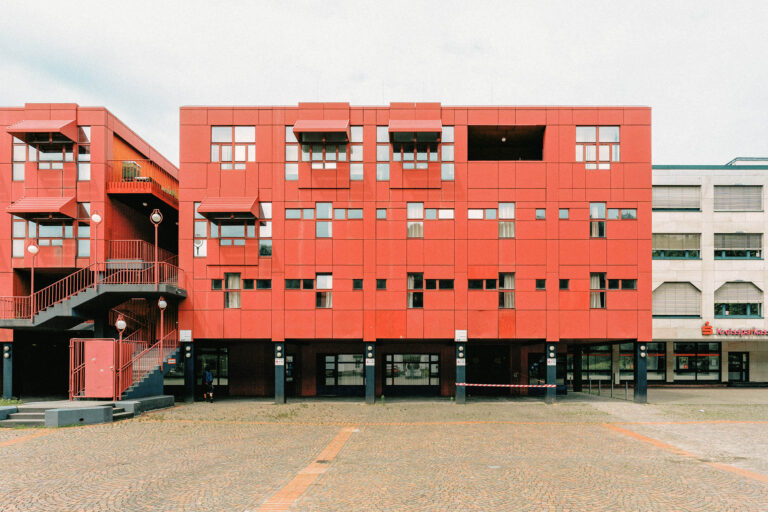
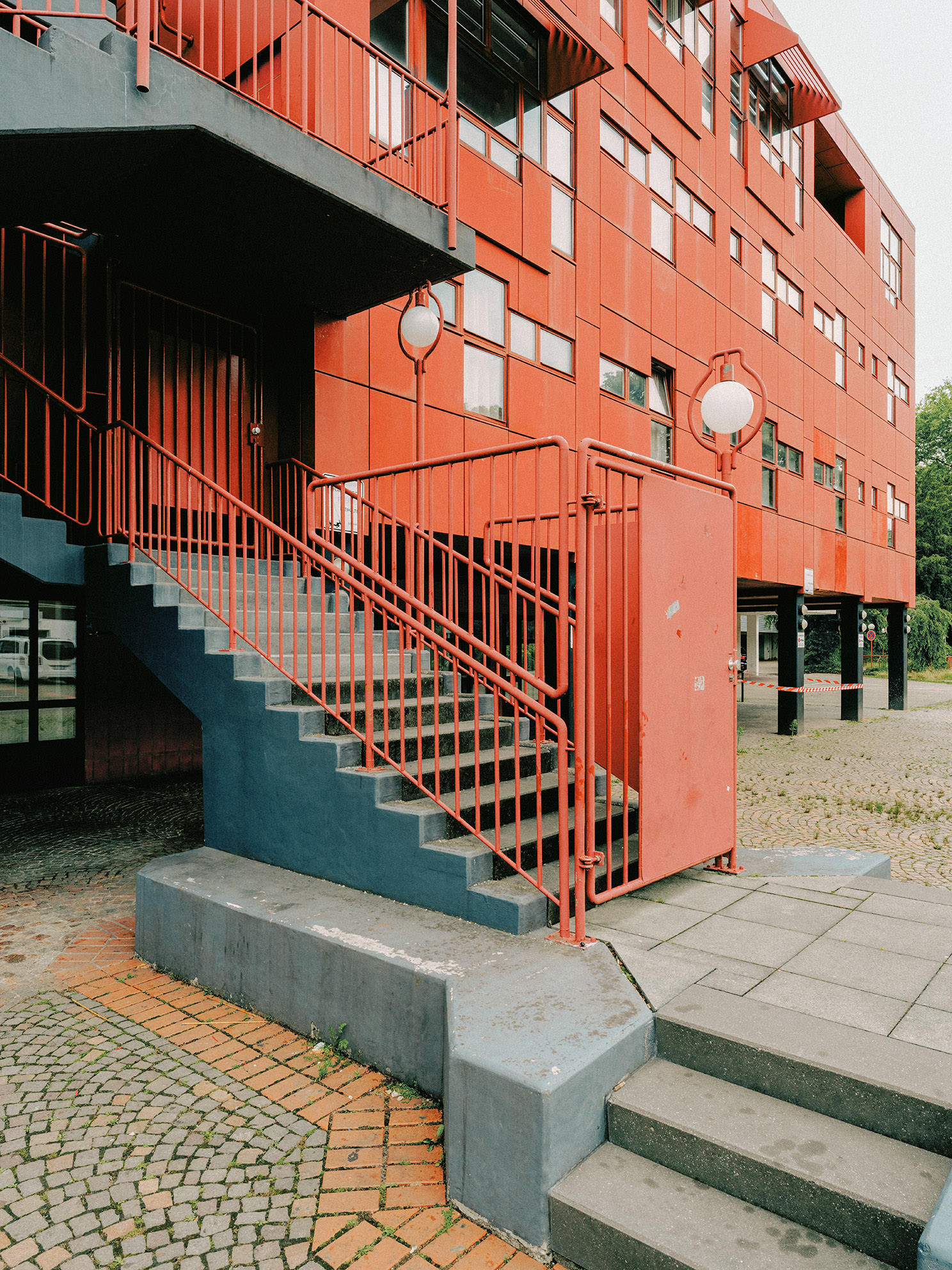
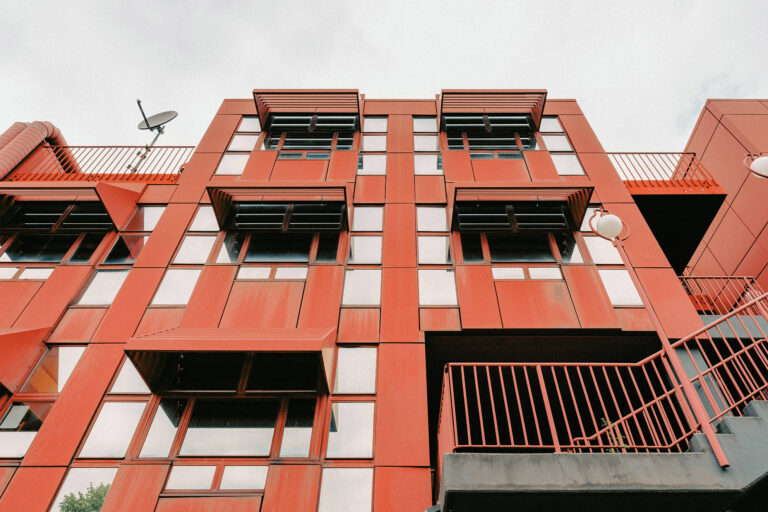
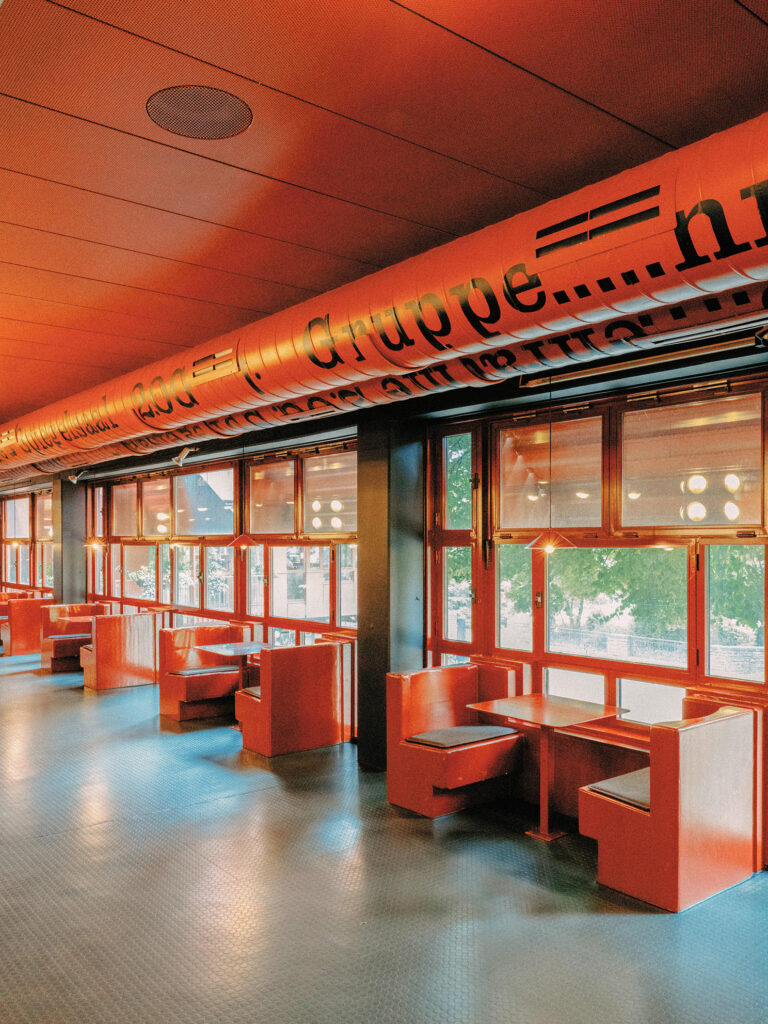
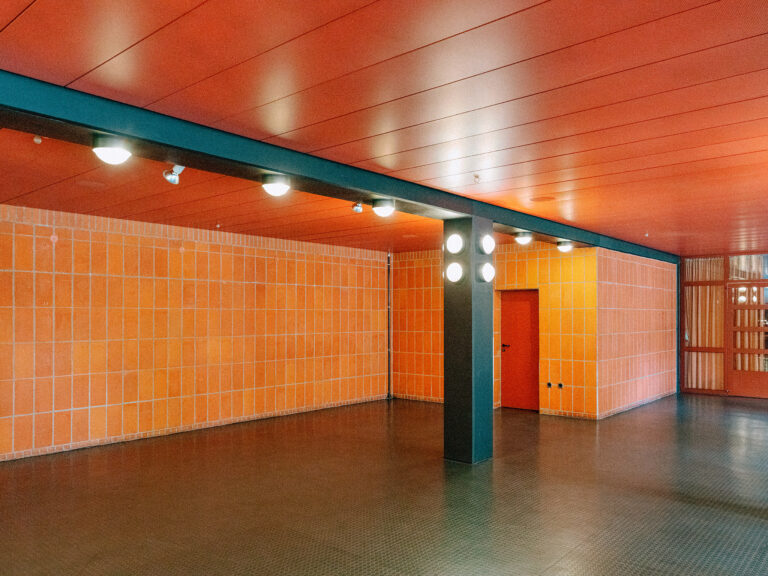
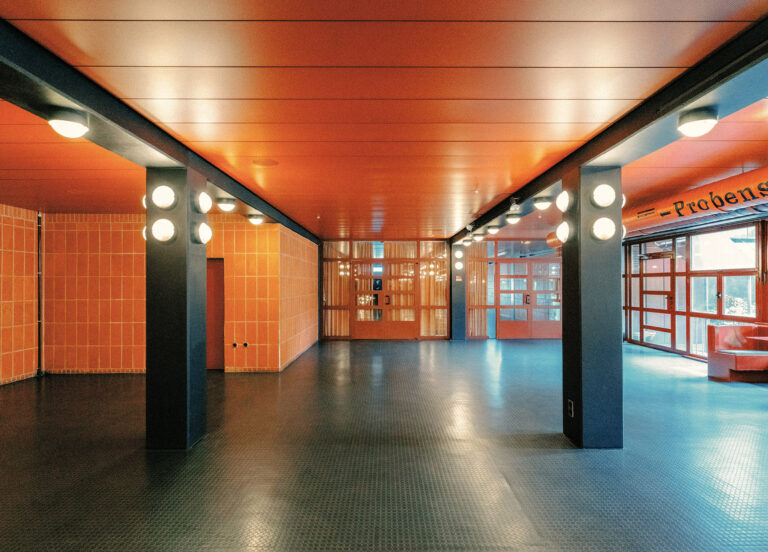
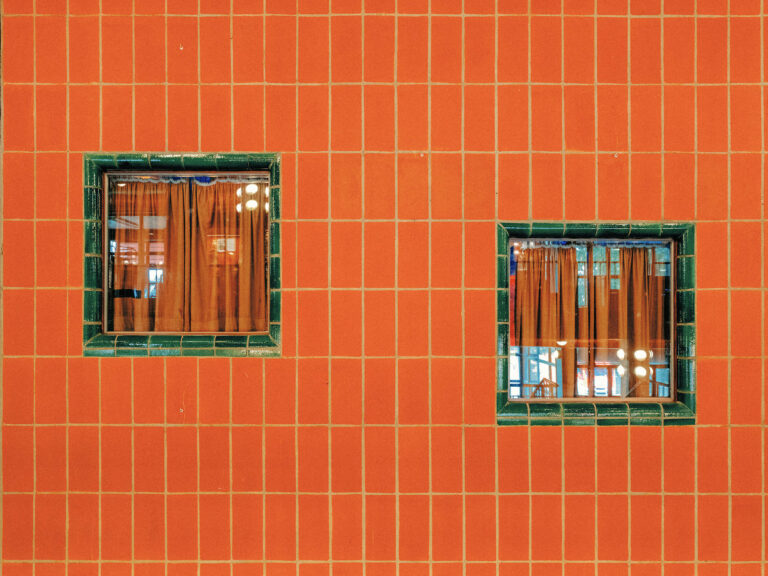
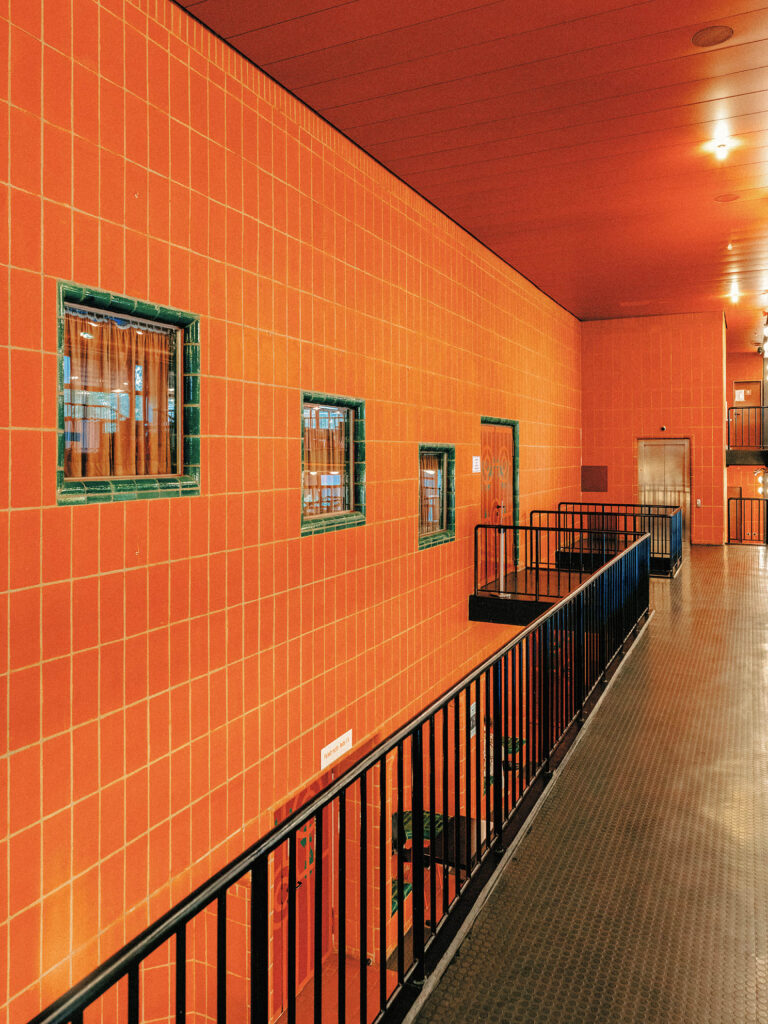
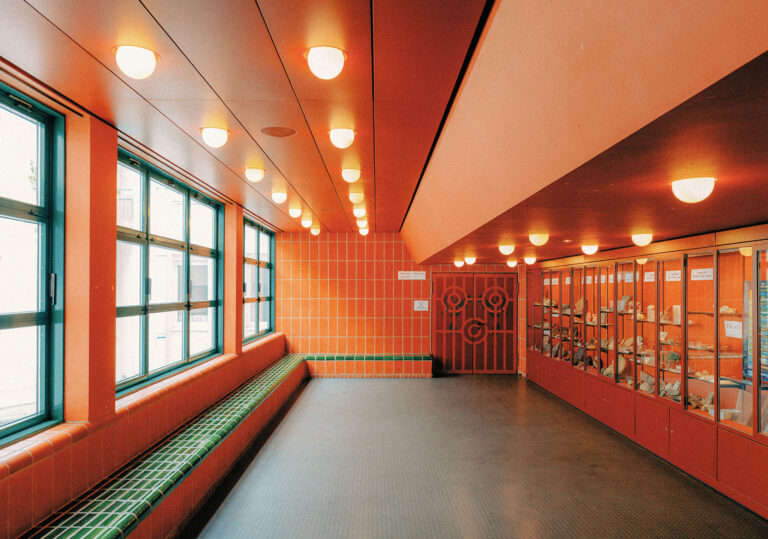
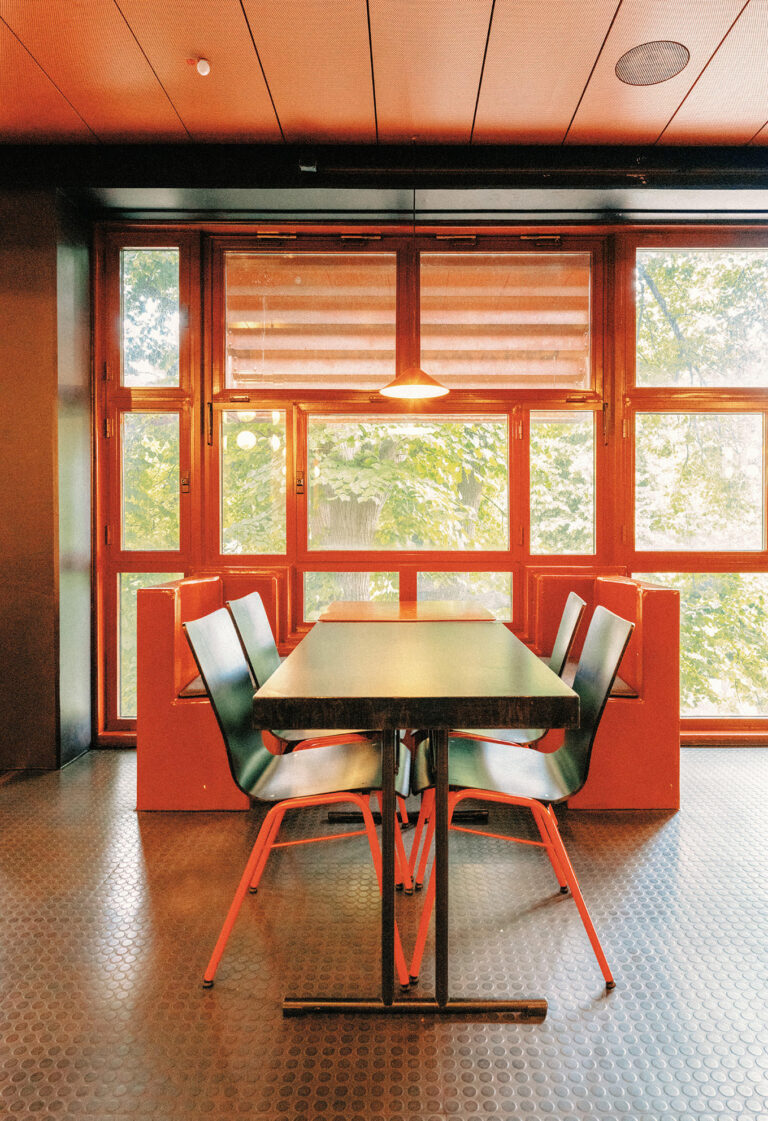
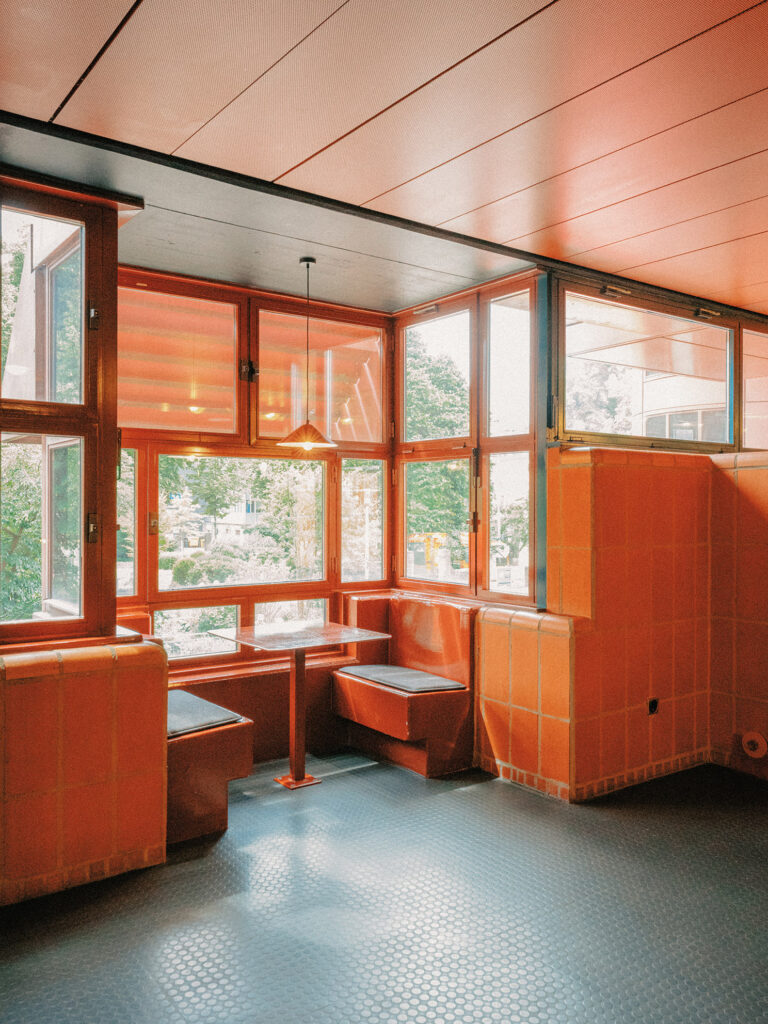
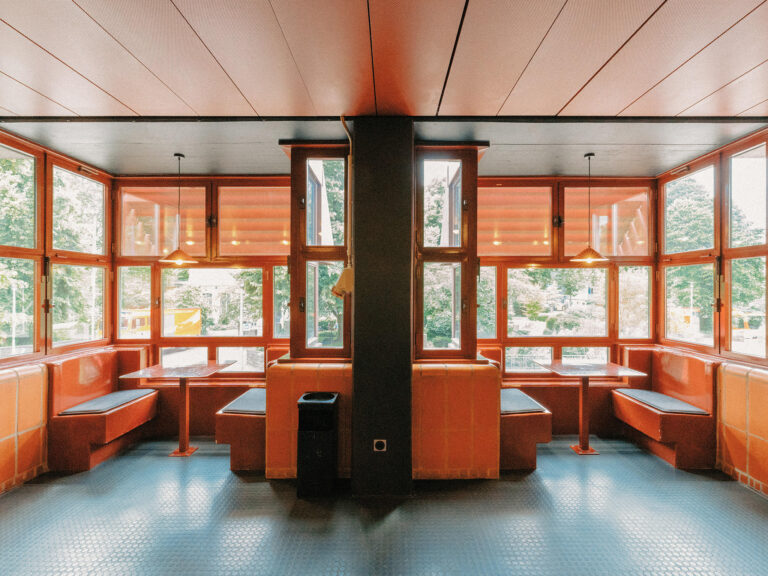
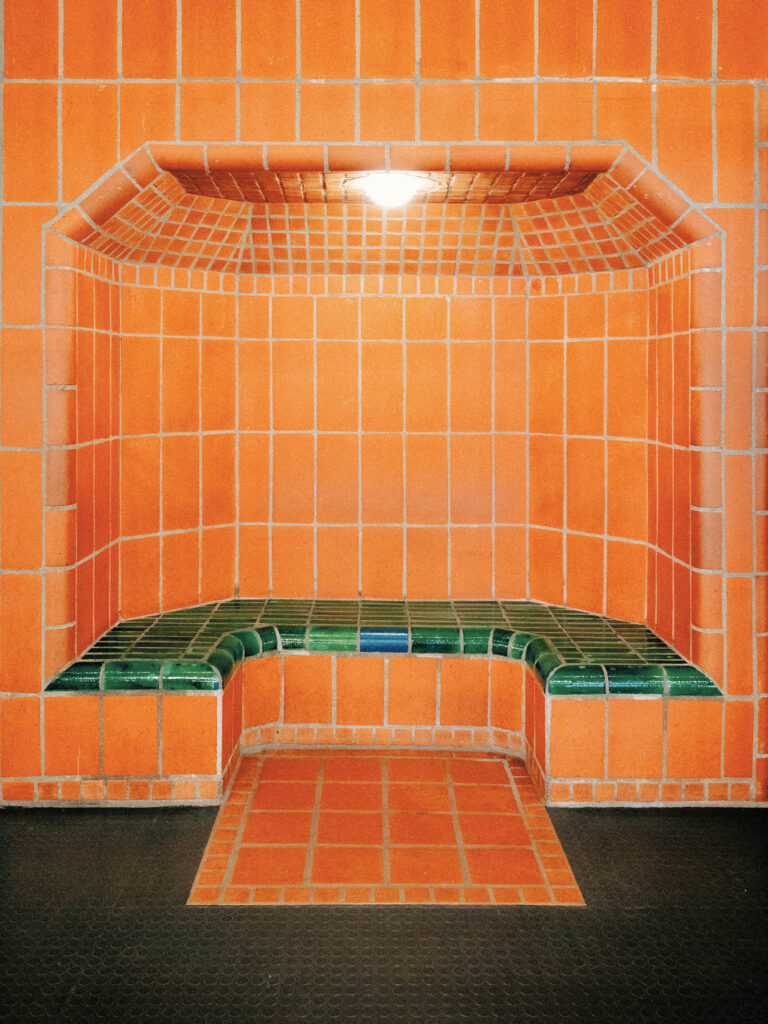
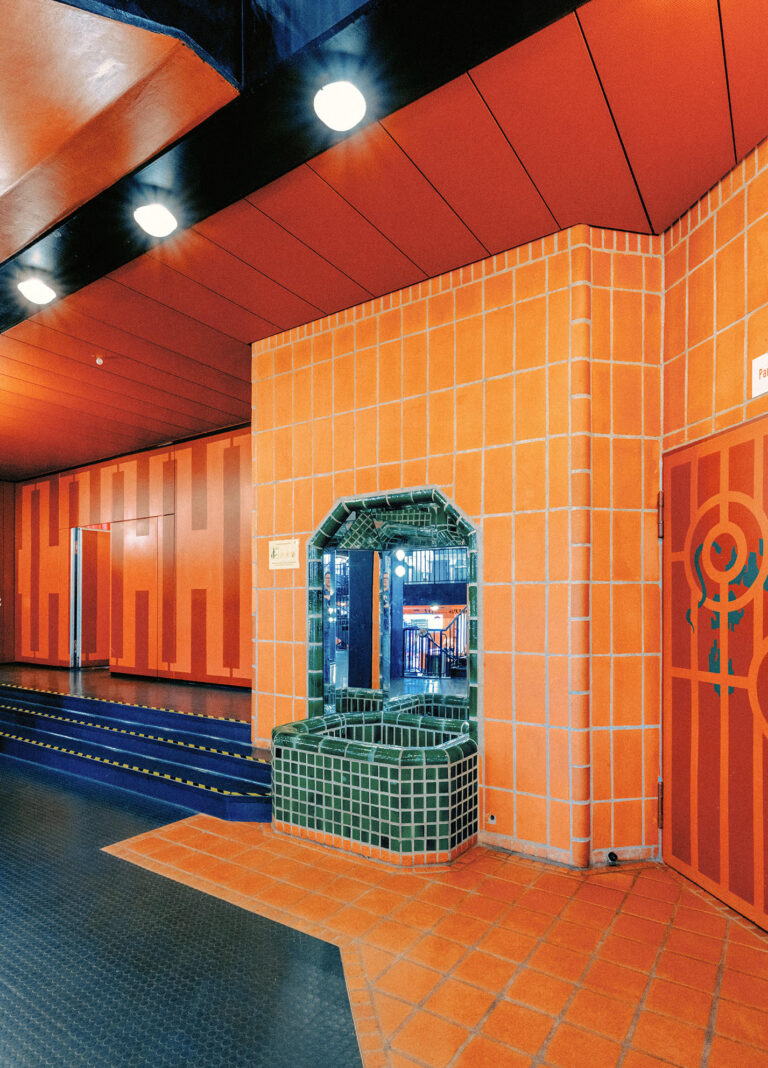
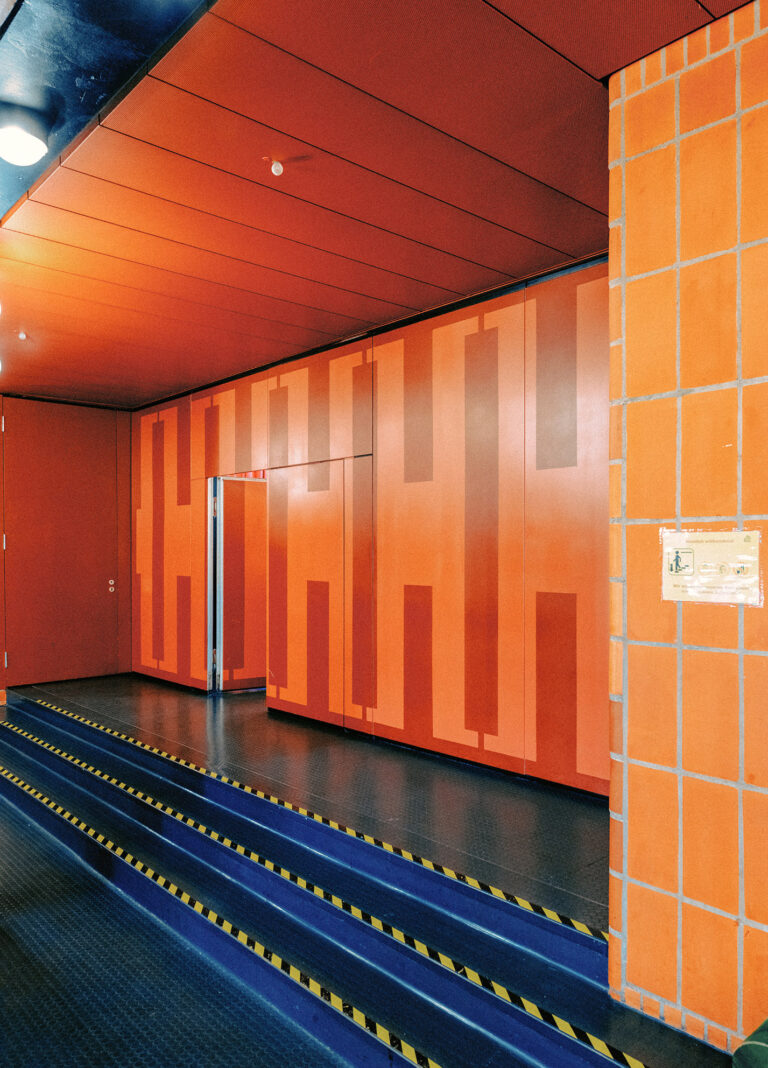
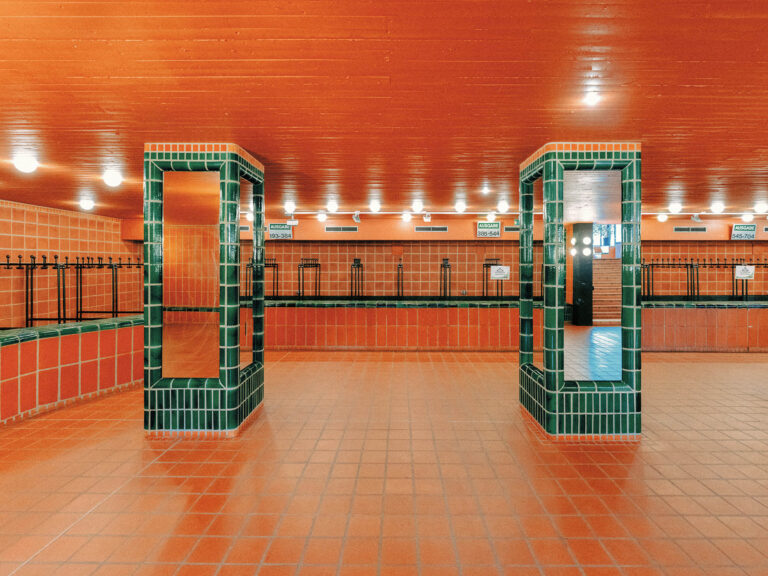
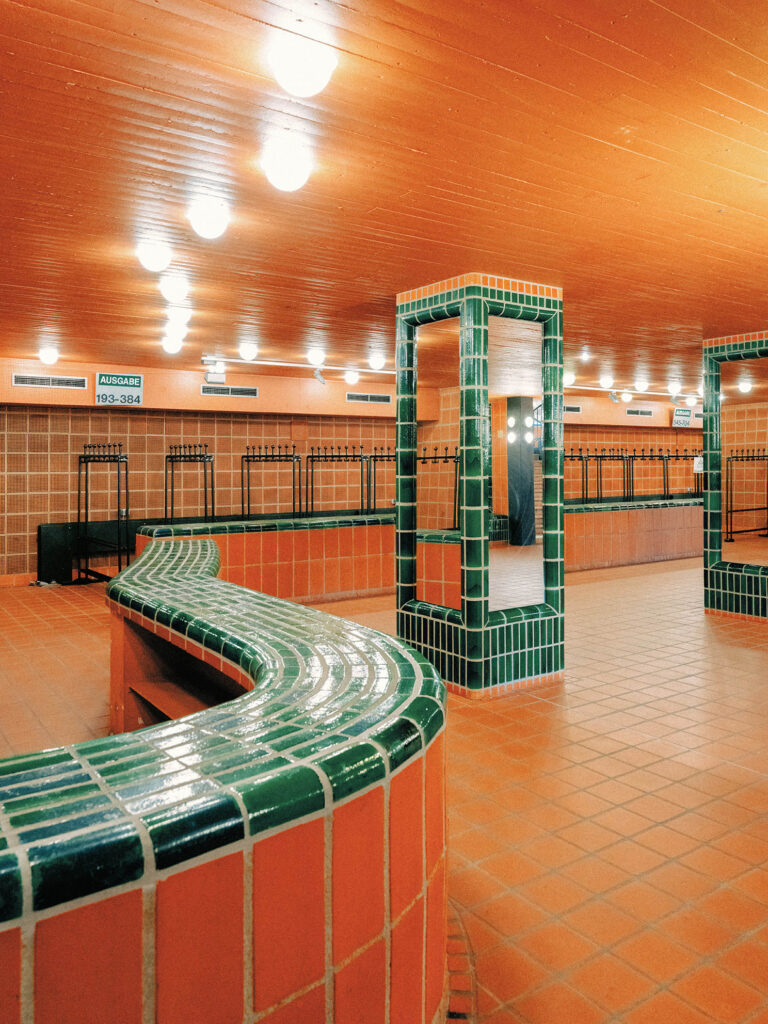
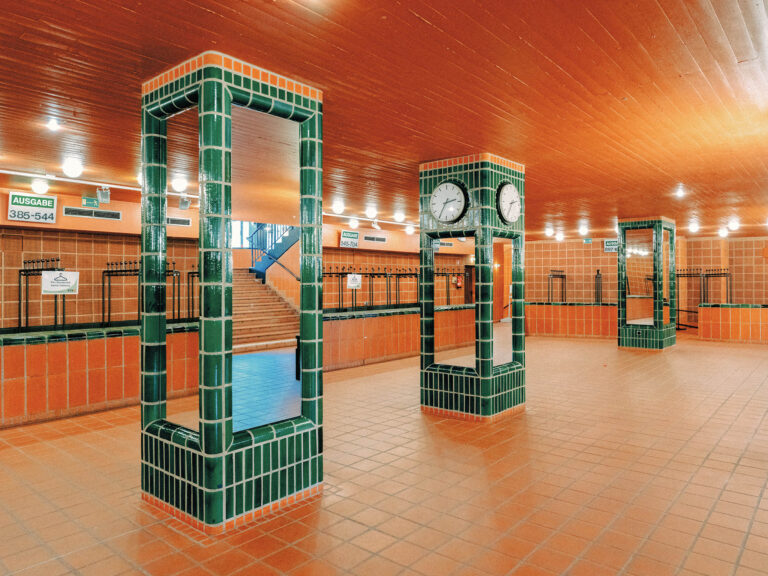
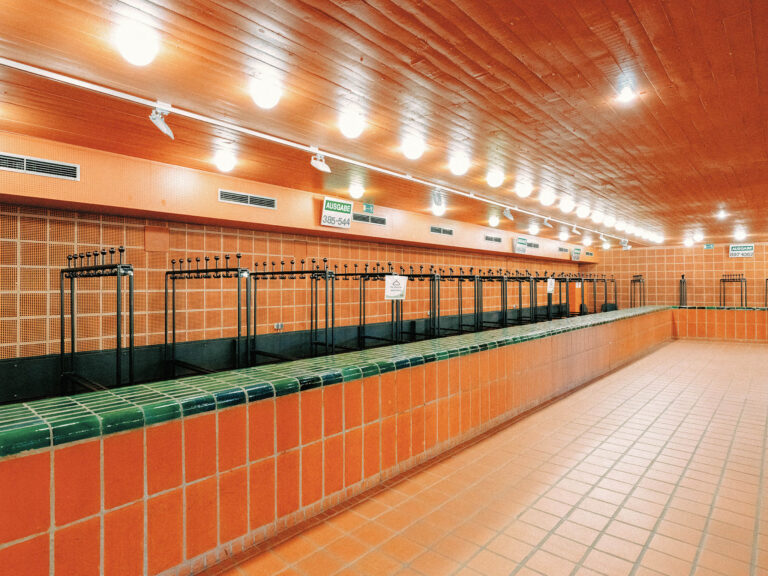
The Bürgerhaus Bergischer Löwe (literally “Bergisch Lion”) in Bergisch Gladbach was completed in 1977 and reflects the wave of municipal cultural buildings constructed in West Germany during the 1960s and 1970s. The name refers to the lion from the historical coat of arms of the region Bergisches Land, of which Bergisch Gladbach is part, and is a common regional symbol.
The architect was Gottfried Böhm, one of the most important German architects of the post-war period and later recipient of the Pritzker Prize (1986). Within Böhm’s body of work, the Bergischer Löwe occupies a more restrained position compared to his better-known sculptural church buildings, such as his expressive concrete designs of the 1960s. Instead, it belongs to a phase in which he increasingly engaged with urban and civic programmes, focusing on multifunctional buildings embedded in existing city structures.
The project reflects Böhm’s interest in clearly organised volumes and adaptable interior spaces rather than formal monumentality. At the same time, it demonstrates his ongoing concern with the relationship between architecture and the city, as the building was conceived as a publicly accessible cultural centre within the urban fabric. In this sense, it forms part of his broader shift toward programmatically driven, urban-oriented architecture.