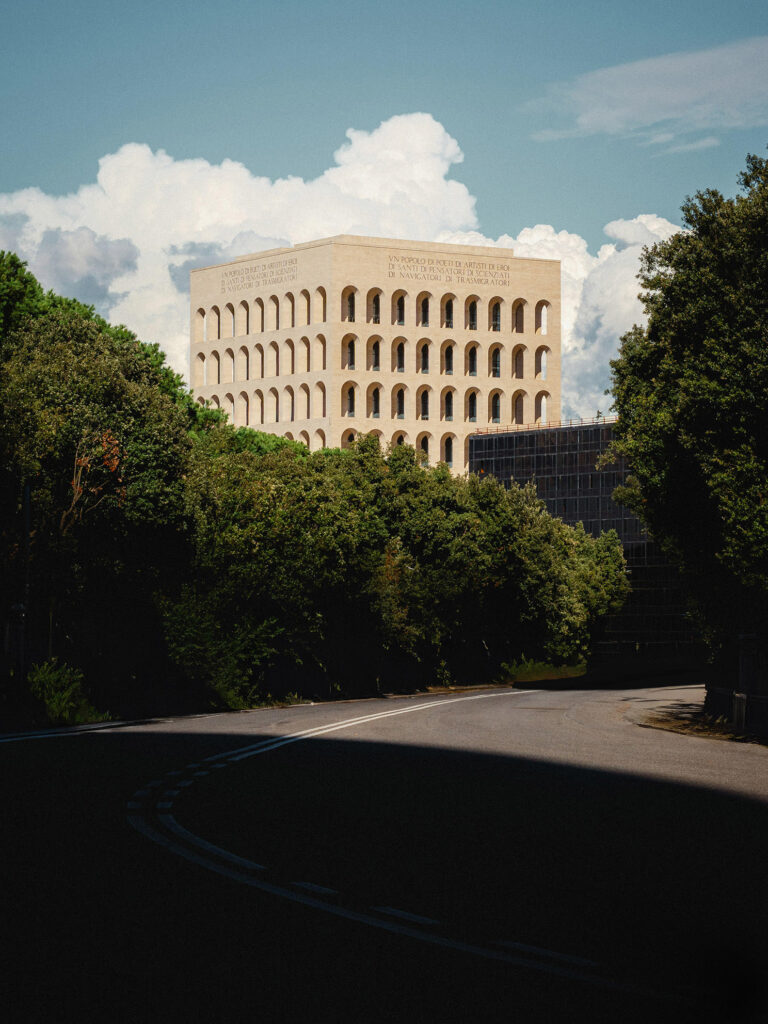
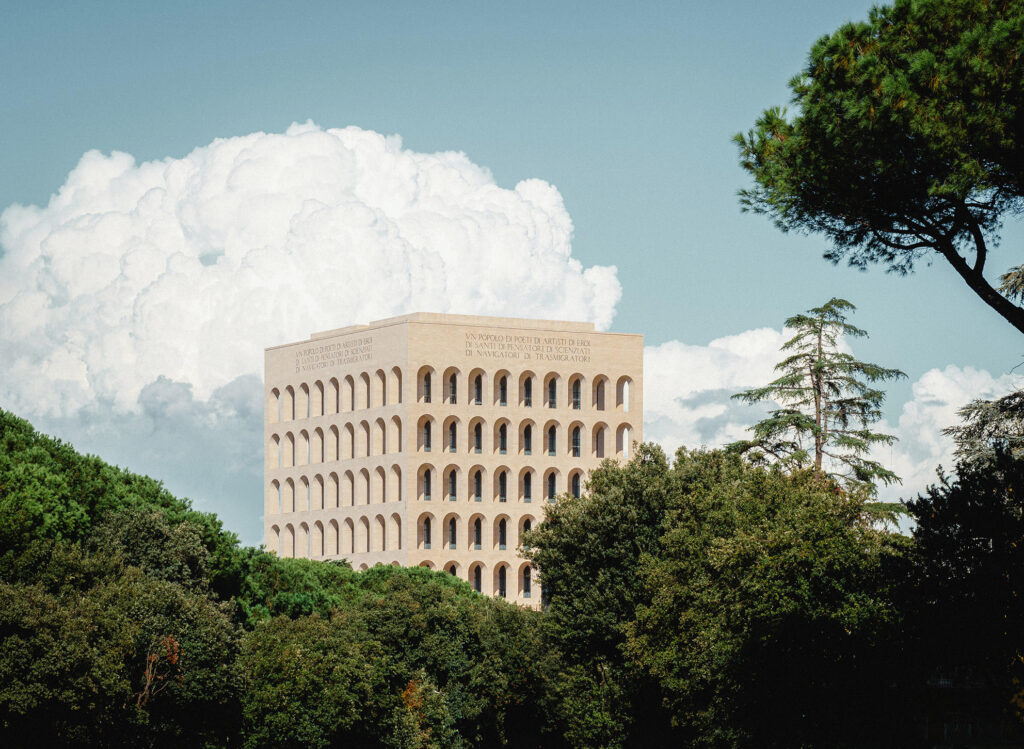
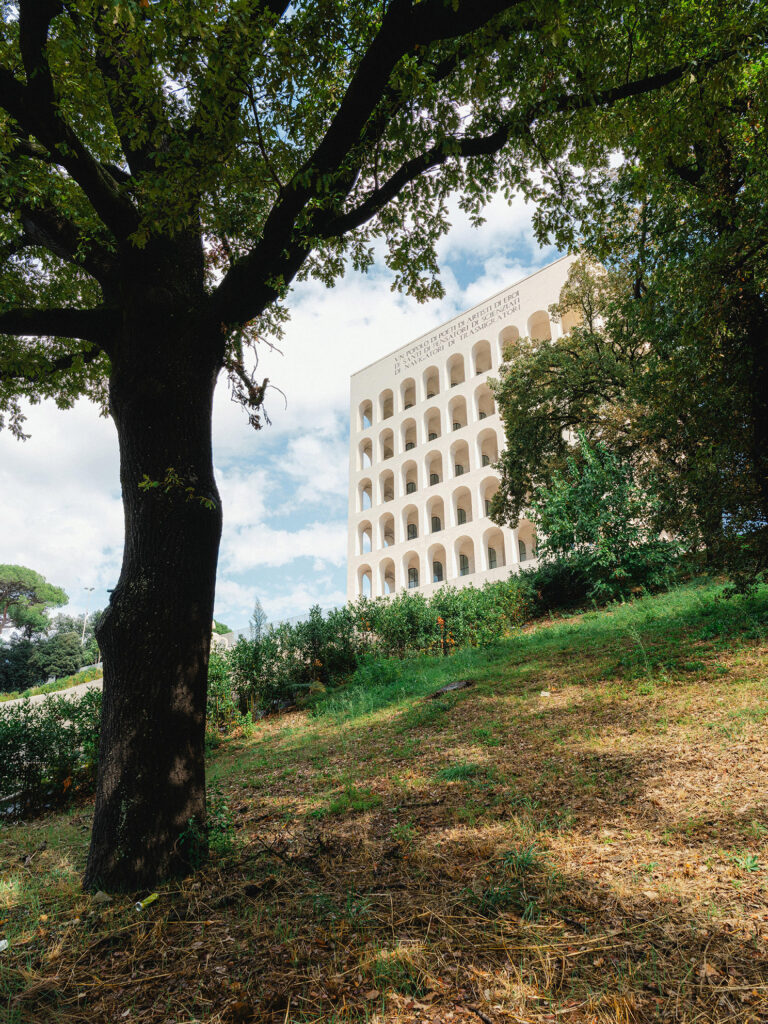
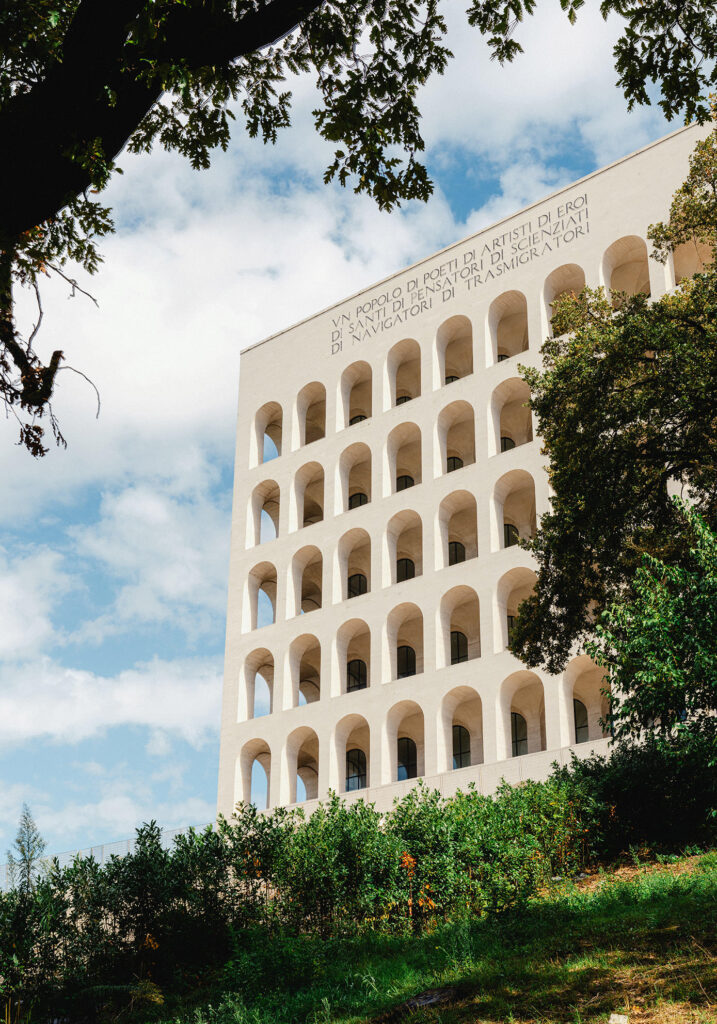
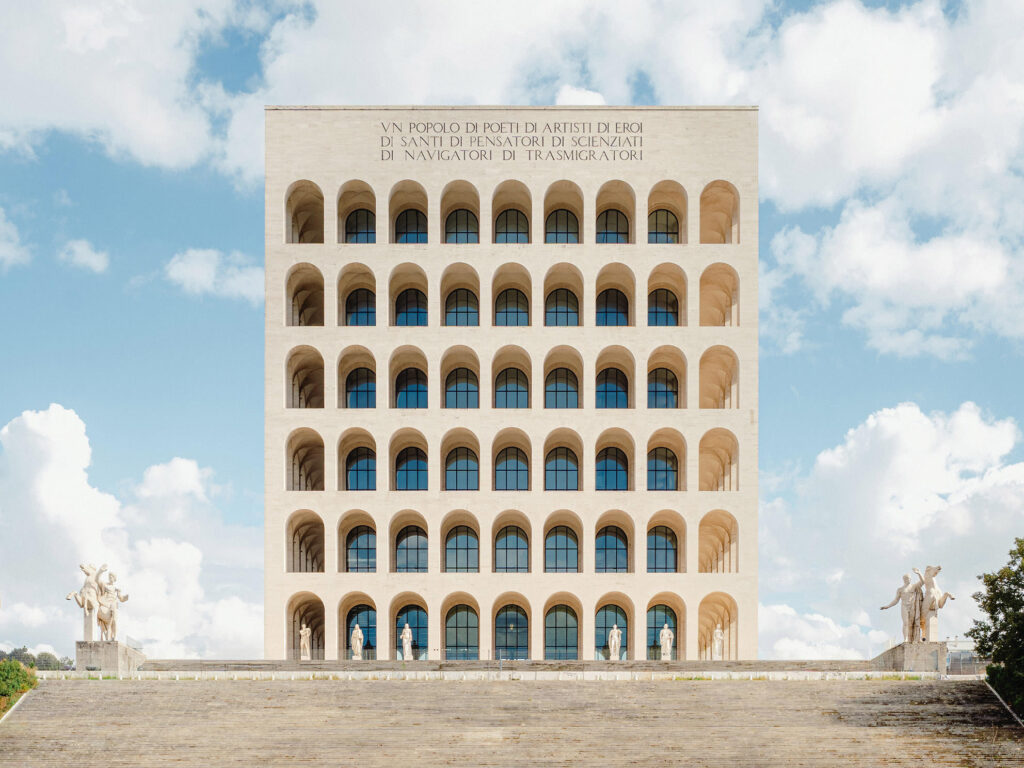
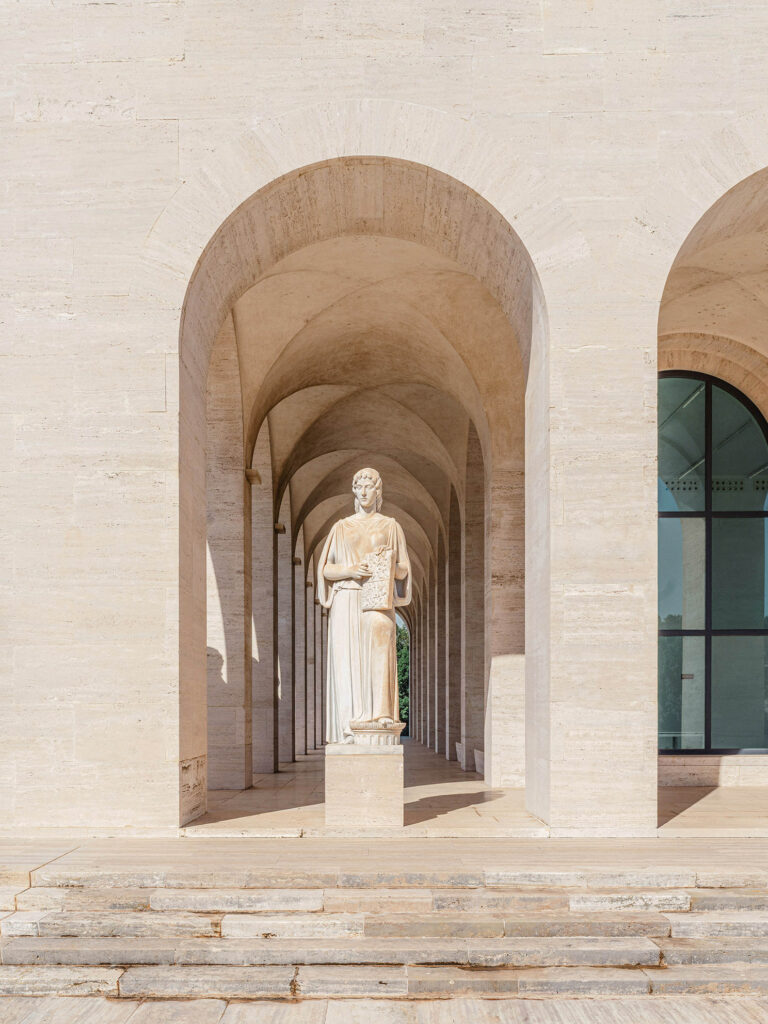
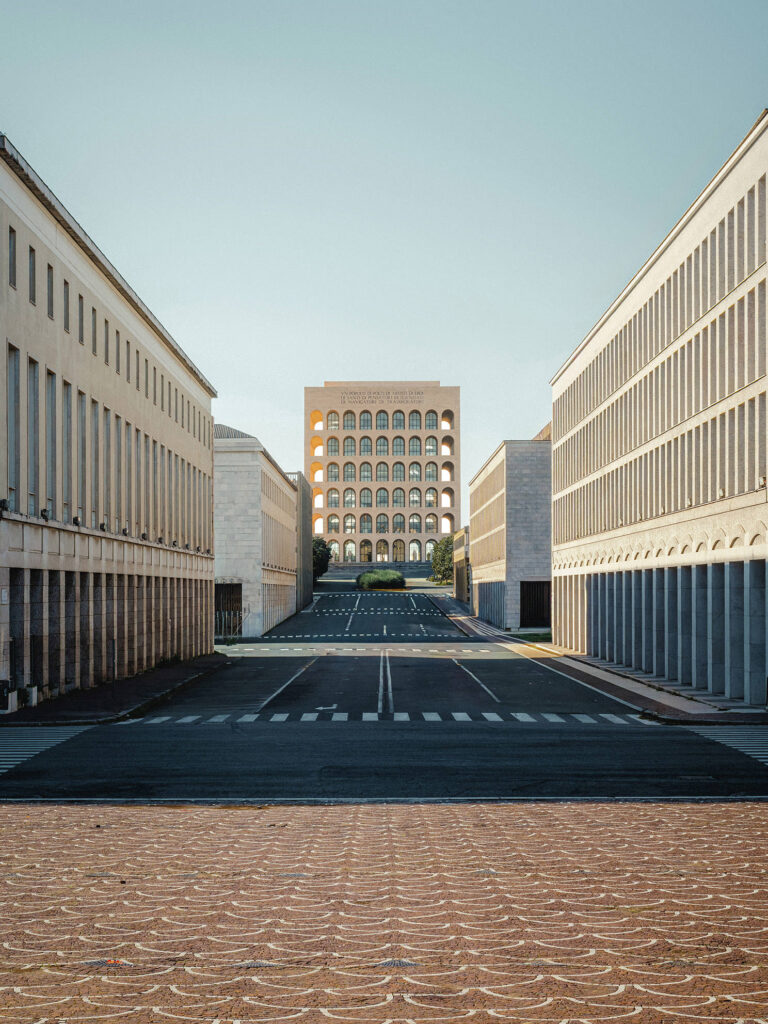
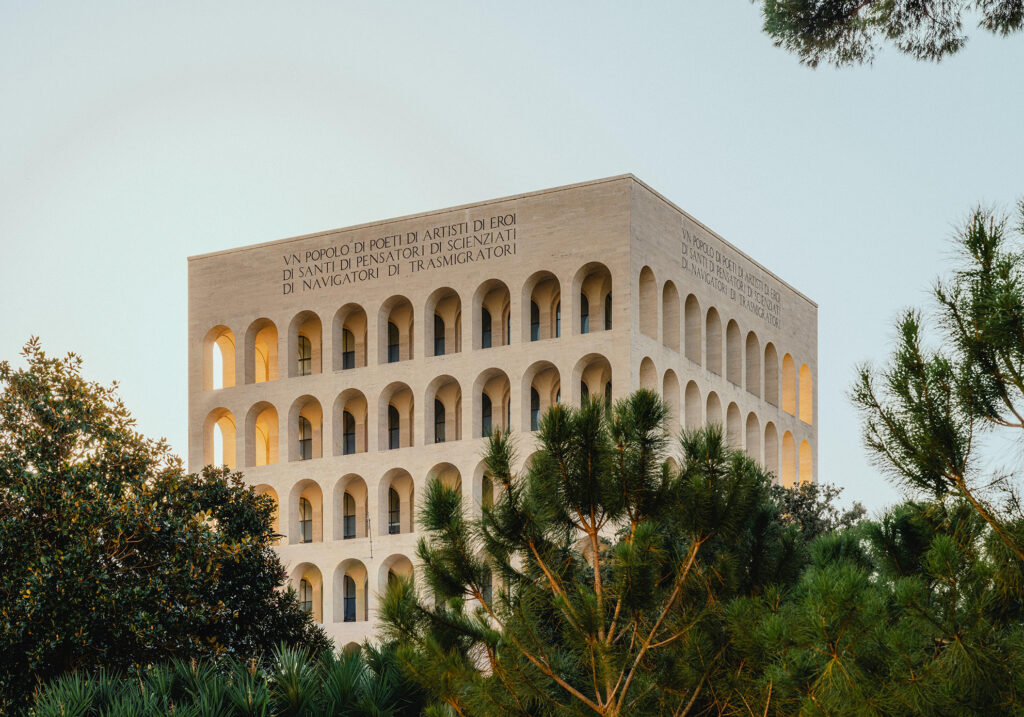
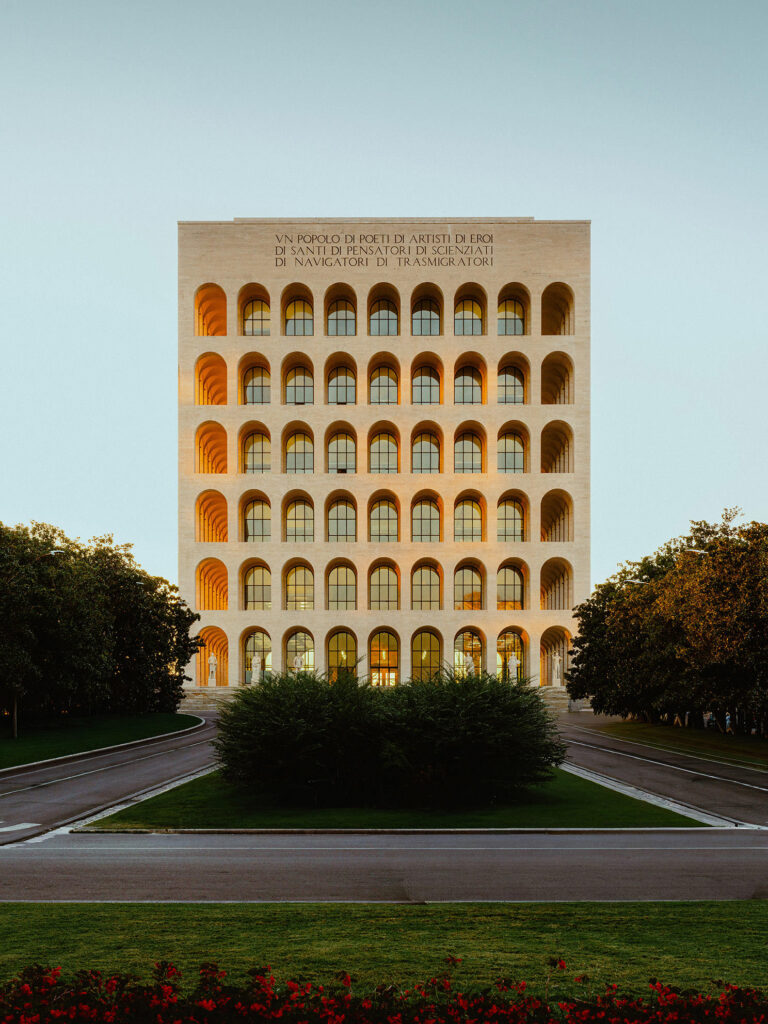
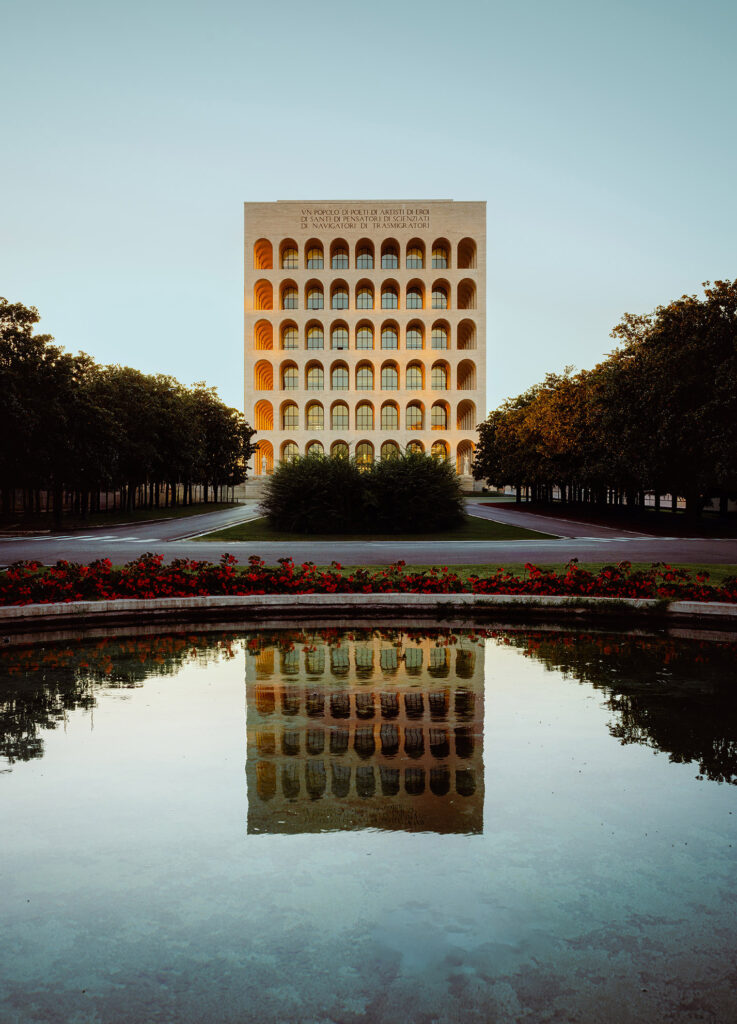
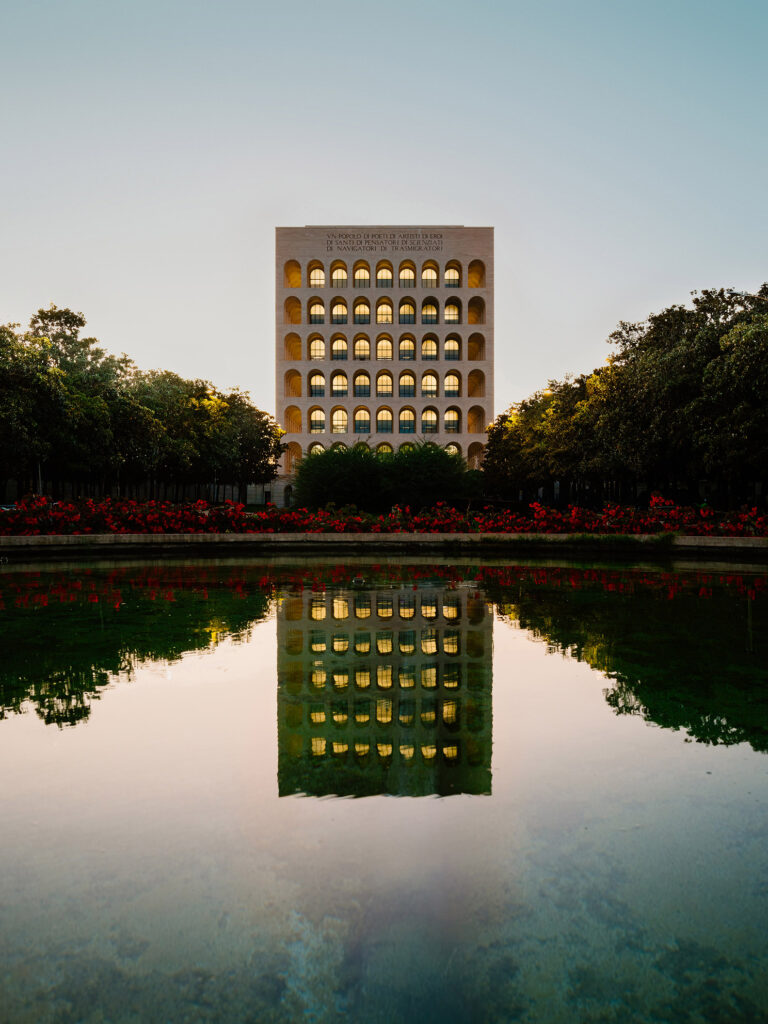
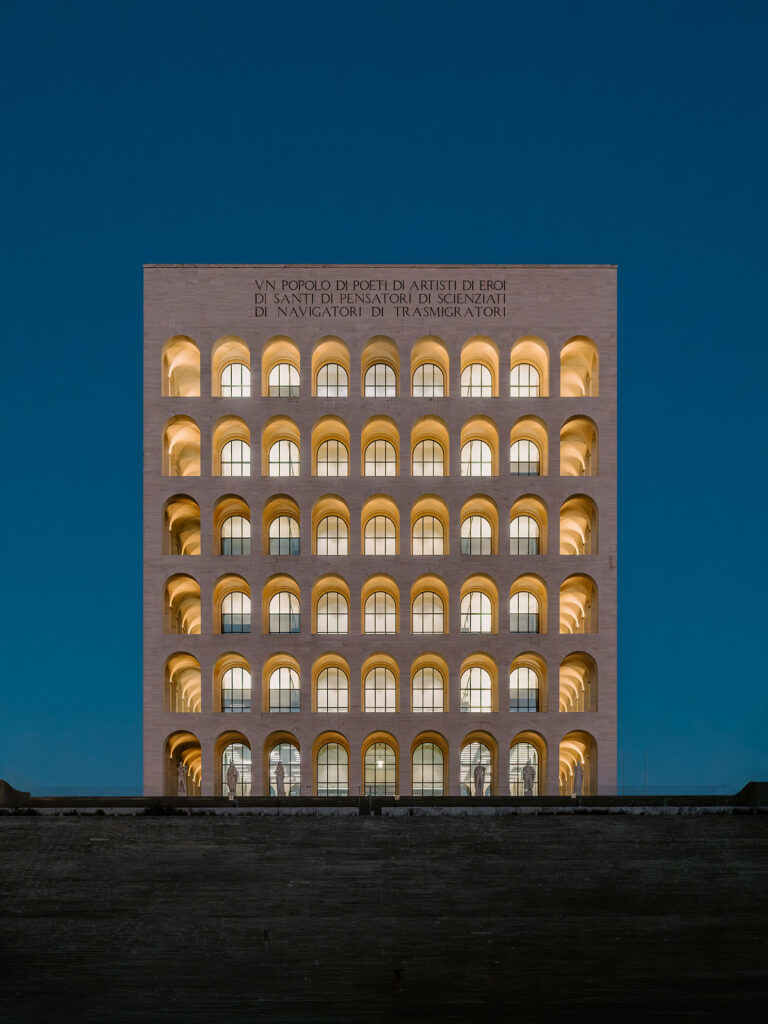
The Palazzo della Civiltà Italiana – often called the Colosseo Quadrato (“Square Colosseum”) – is one of the defining architectural icons of Rome’s EUR district. Designed in 1938 by the architects Giovanni Guerrini, Ernesto Bruno La Padula, and Mario Romano, it was intended to be a centrepiece of the planned 1942 Universal Exposition in Rome. Although the exposition never occurred, construction continued through World War II and was substantially completed around 1943 as part of the larger urban development of EUR.
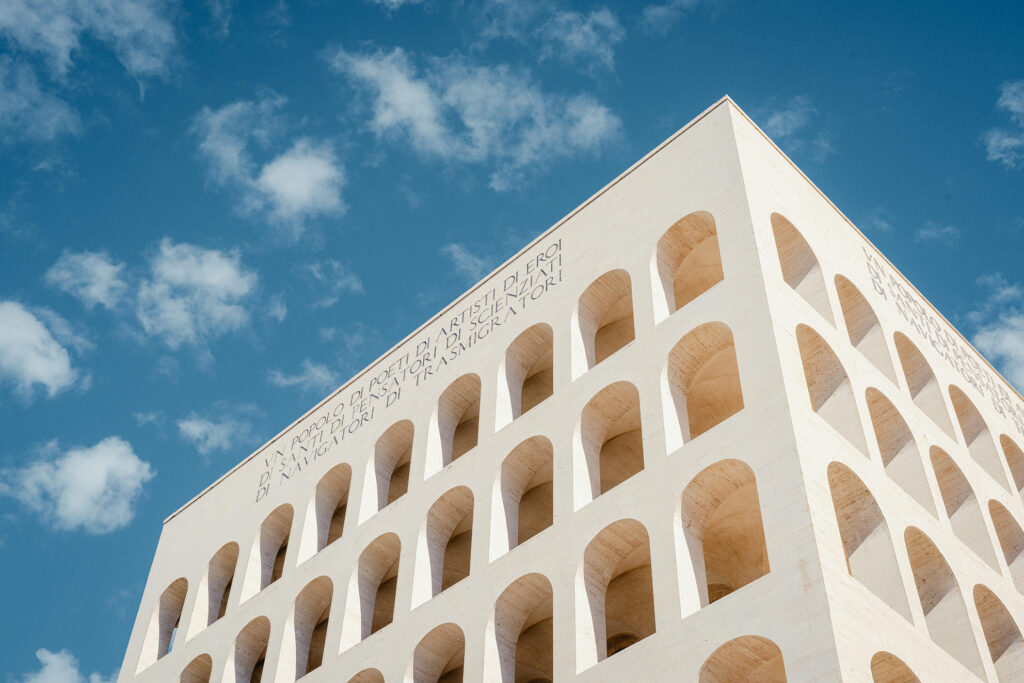
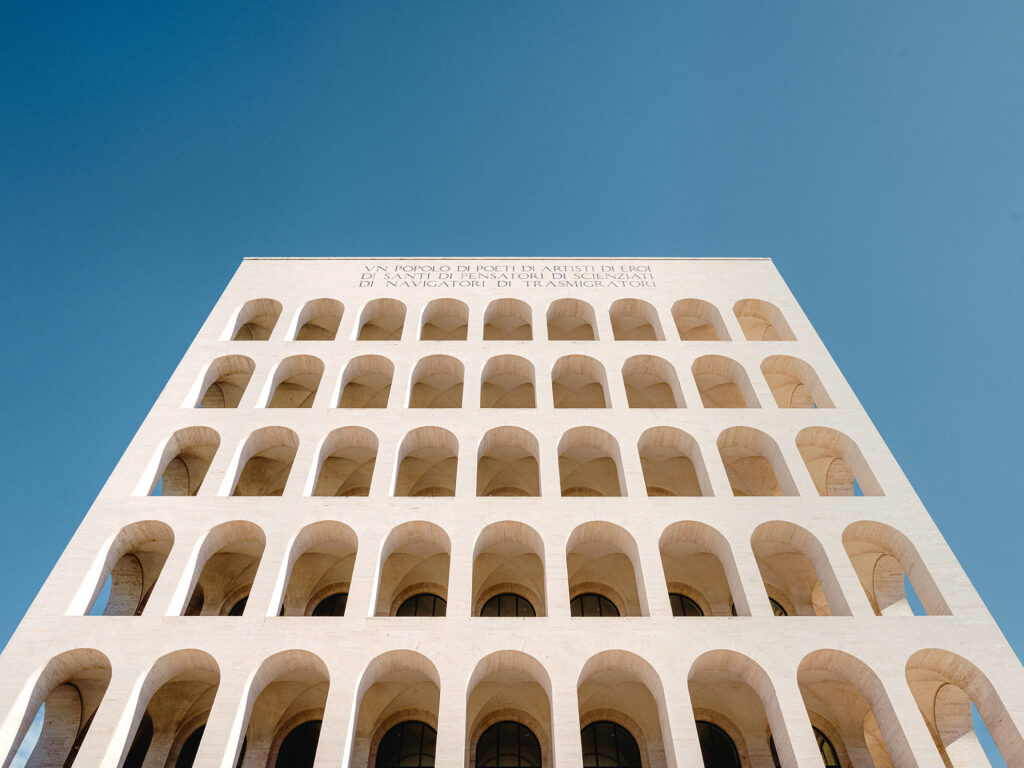
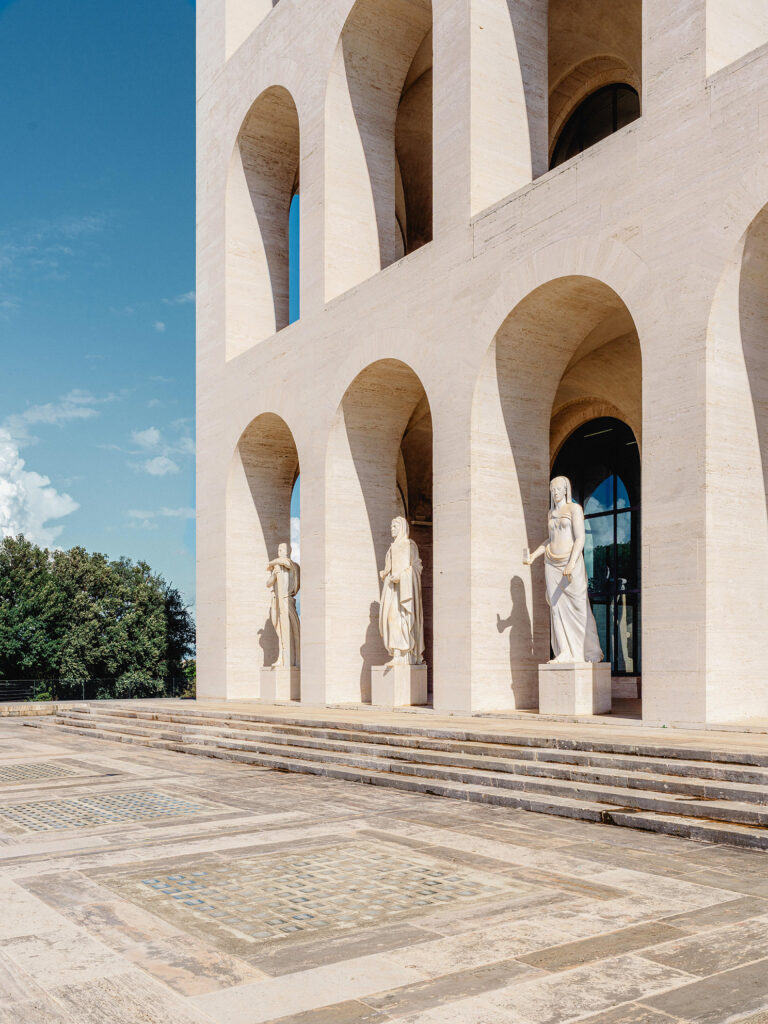
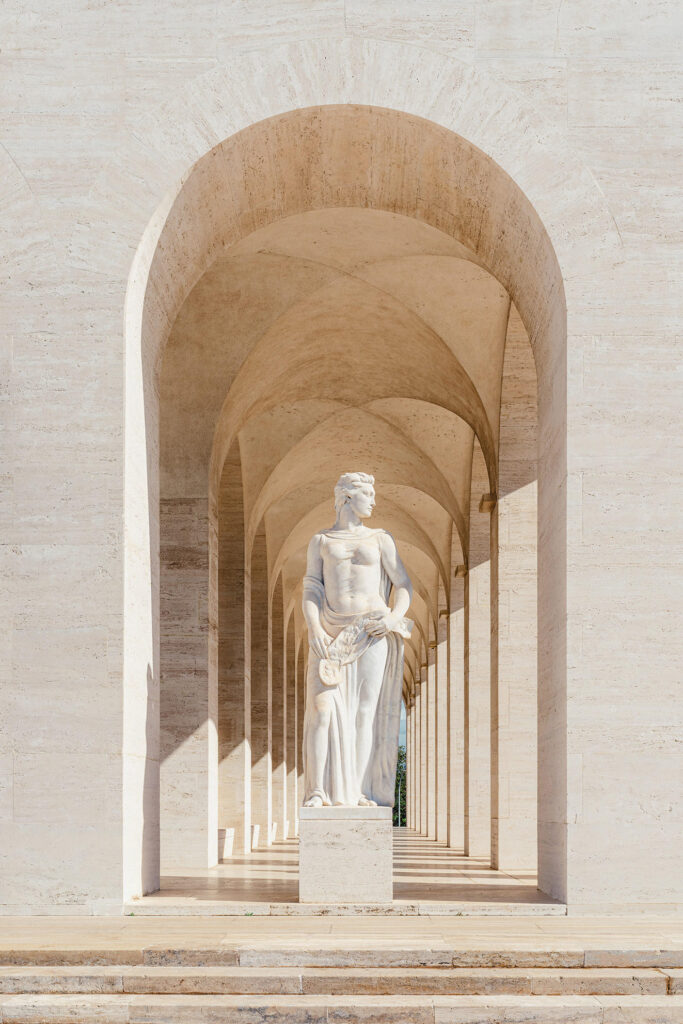
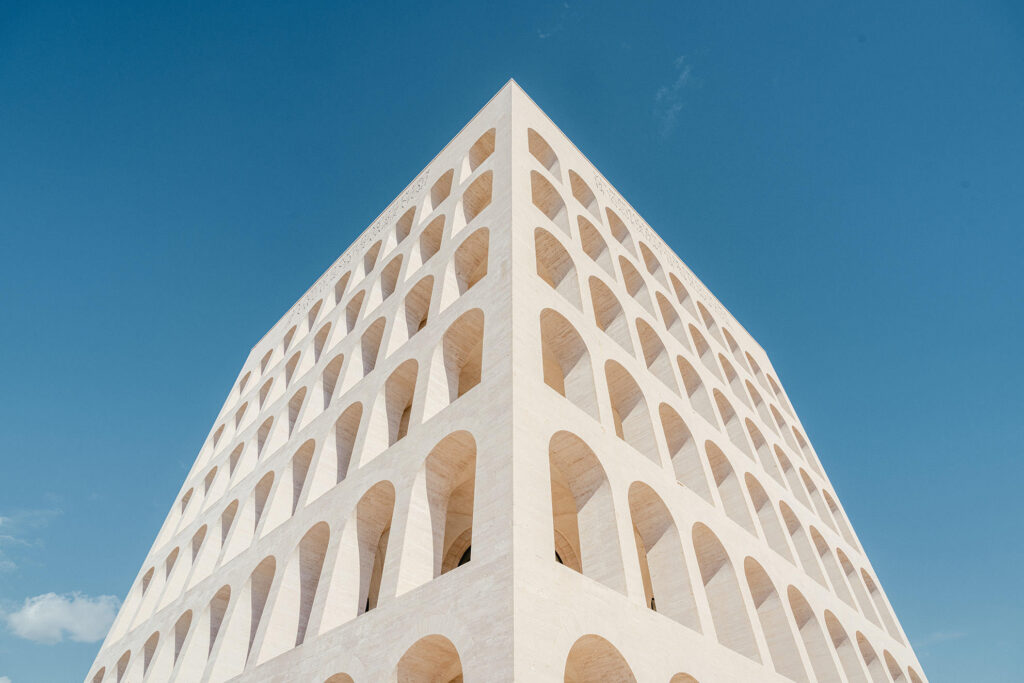
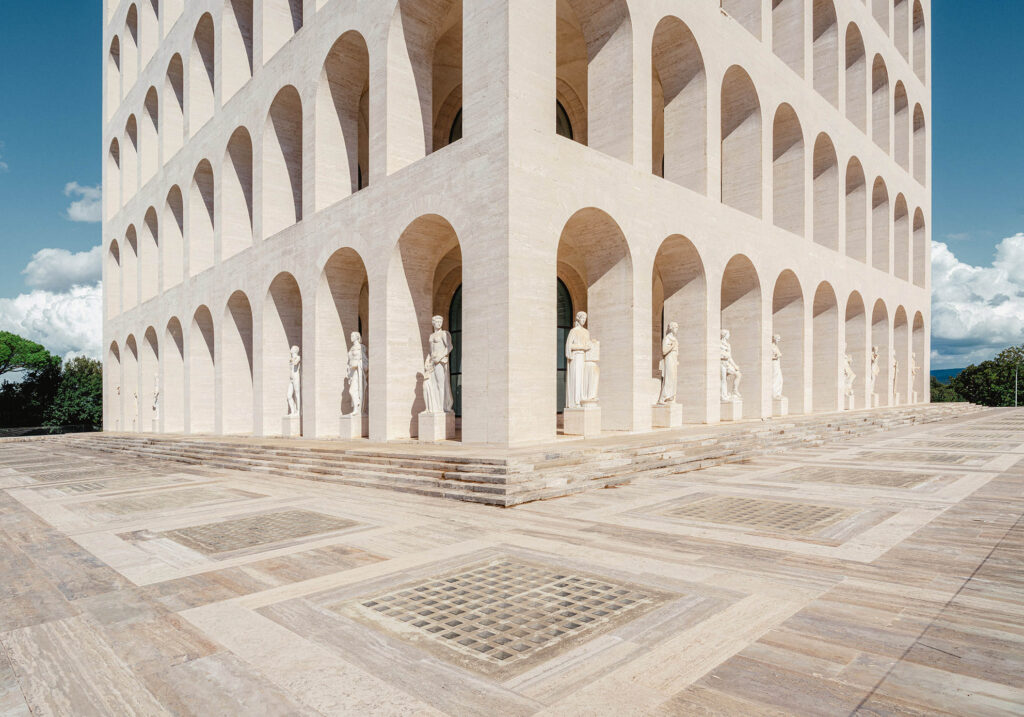
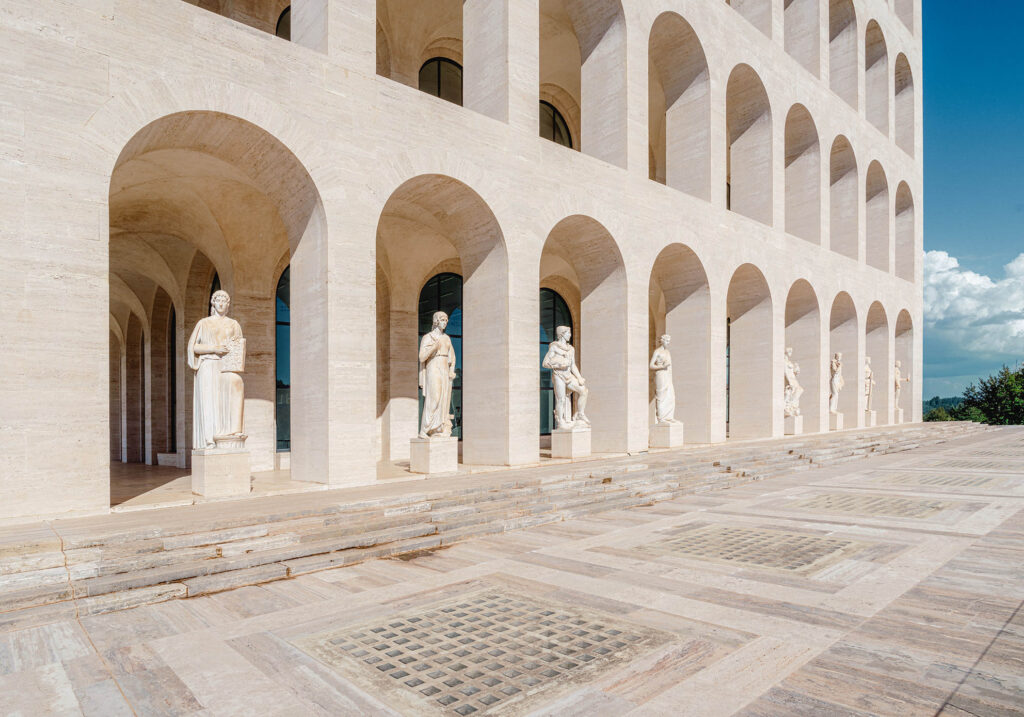
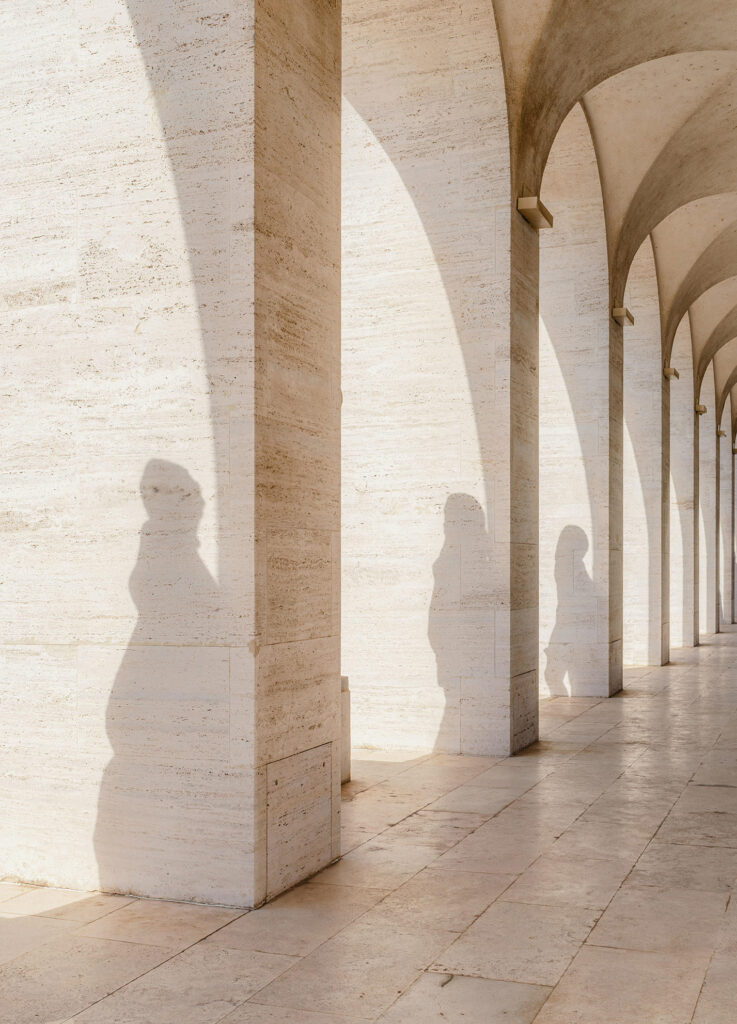
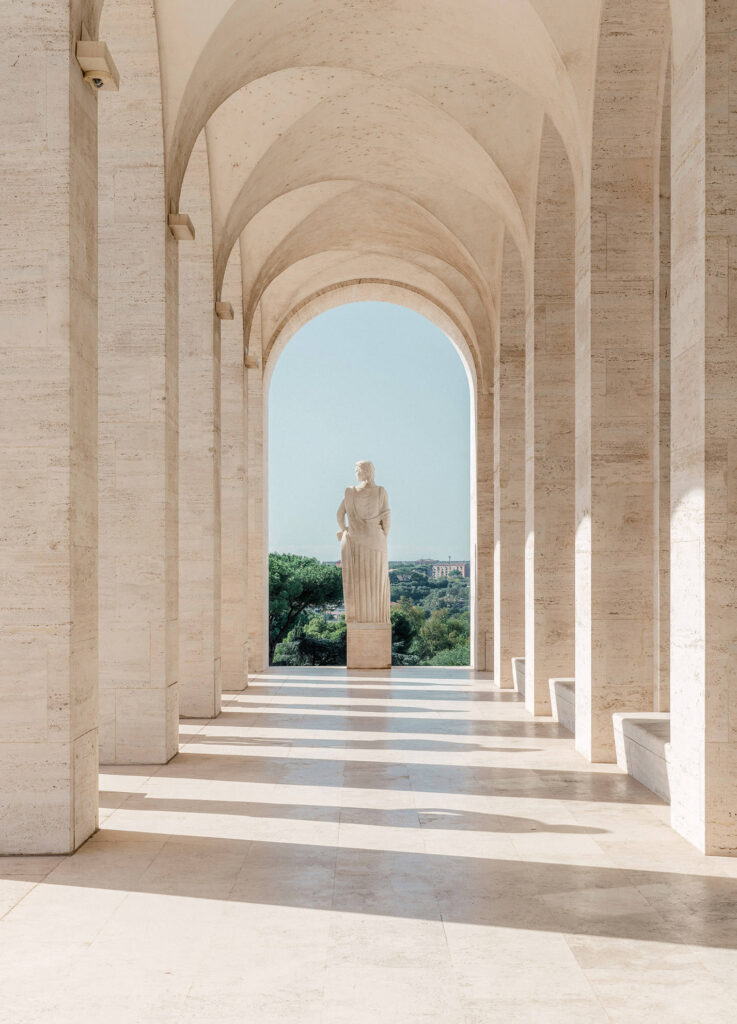
Architecturally, the building exemplifies the Italian strand of Rationalism and what is often described in English as simplified neoclassicism – a modernist reinterpretation of classical architectural language. Its façades consist of a strict grid of symmetrical arches, repeated six times vertically and nine times horizontally, clad entirely in travertine to create an impression of monumental simplicity and permanence. This rigorous geometry and repetitive order reflect a broader design ethos in EUR, where architects sought to combine modernist restraint with references to Rome’s classical heritage.
In architectural history, the Palazzo della Civiltà Italiana occupies an important position as a mid‑20th‑century rationalist landmark. Although rooted in the political context of Fascist Italy, its formal language – the interplay of proportion, repetition, and classical reference without ornament, influenced later discourse on modern monumental architecture. The building’s aesthetic impact lies in its disciplined clarity and the way it translates classical reference into a modern architectural project. Since 2015, it has housed the headquarters of the fashion house Fendi, linking its historical legacy with contemporary cultural and commercial use.